

Prepare the Page
Before you draw your first circle, there is one small matter to address.
The page must be ready.
This may sound obvious. It is not. A loose sheet of paper has more ambition than people realise. It curls. It slides. It drifts. It waits until your compass is perfectly placed, then makes a break for freedom.
Orin has seen it happen. He was not impressed.
A good drawing begins before the pencil touches the page. You need the right surface, suitable paper, and just enough tape to keep everything exactly where it belongs.

Orin’s Setup Rule
Do not begin with chaos and hope accuracy will somehow appear.
Choose a firm surface. Set down your paper. Tape the corners. Check that nothing slides, wobbles, buckles, curls, or behaves like it has other plans.
Then, and only then, you are ready for circles.
Set Up Properly
The Surface
First, choose a proper surface.
Paper needs a firm stage. Too soft, and your pencil digs in. Too hard, and your compass can slip. Neither of these outcomes is elegant.
A firm desk is ideal. A cutting mat, sturdy board, or strong piece of cardboard can also work well. If you are using a glass table, place something slightly softer on top so your tools have enough grip.
The aim is simple: firm enough to support your tools, gentle enough to let them move smoothly.
The Paper
Next, place your paper.
Thick, smooth paper is lovely. It holds colour well, feels pleasant under the pencil, and generally behaves with admirable dignity.
But ordinary paper is perfectly acceptable for practice. Geometry does not demand expensive materials before it agrees to be useful.
Place the sheet flat on your surface. Smooth it gently. If it curls up immediately, do not argue with it. Tape exists for precisely this reason.
The Tape
Now, secure the corners.
A small piece of tape at each corner keeps your paper still while you draw. This is especially helpful when using a compass, because circles do not enjoy moving targets.
Press the tape down gently. You are not sealing an ancient treasure vault. You are simply persuading the page to remain where it was put.
Once the paper is taped, give it a tiny test. If it stays still, excellent. If it slides, adjust it now, not halfway through a circle.
The Ready Page
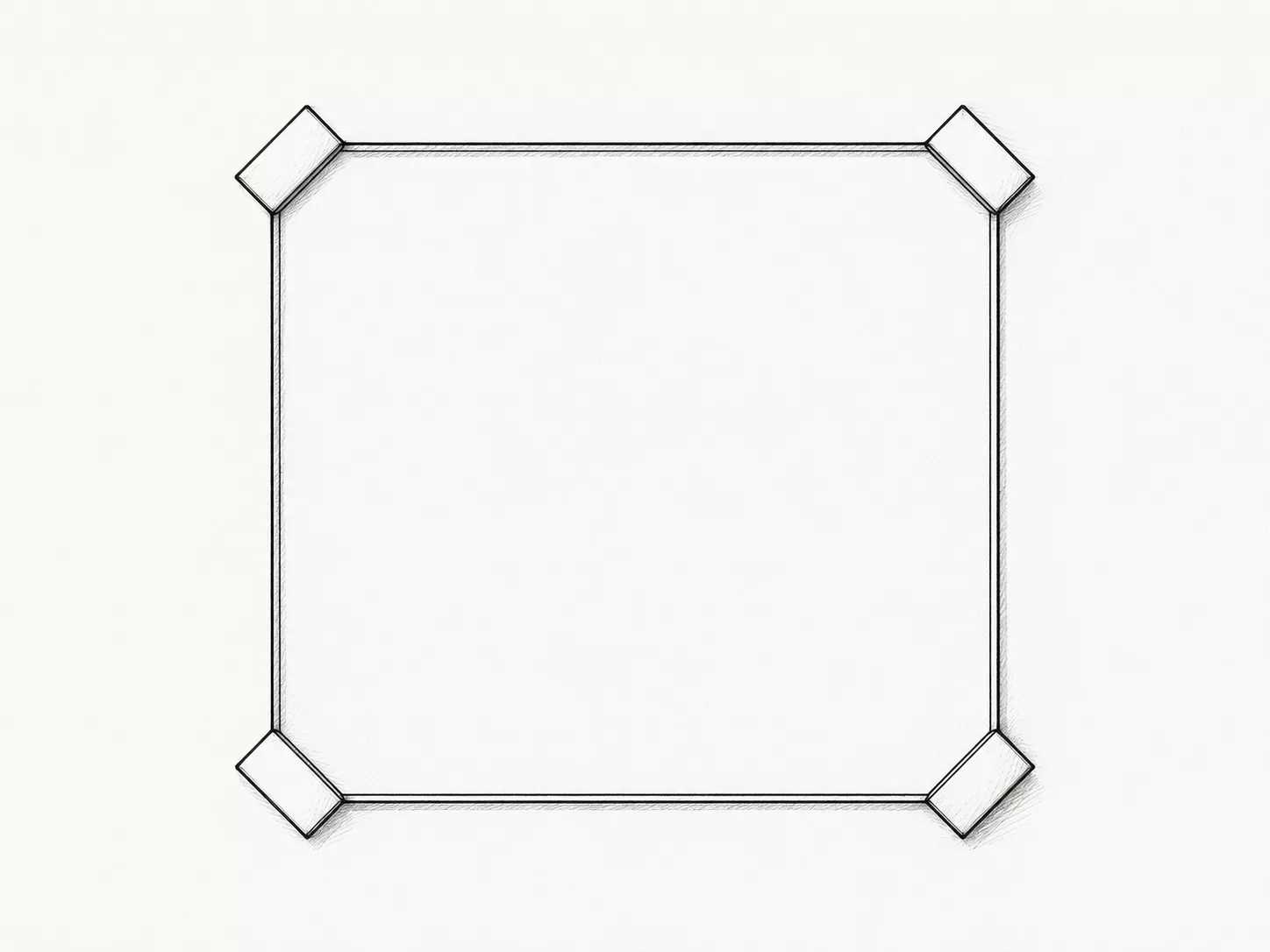
At this point, your page should be flat, steady, and waiting.
Surface chosen. Paper placed. Corners held. Nothing sliding about dramatically.
This may look plain, but plain is exactly right. A clean page is not empty. It is prepared.
And once the page is prepared, the first real act of geometry can begin: the circle.