

Circles
Smudge turned to the board and attempted to draw a perfect circle with his special chalkboard compass.
SCRRRT! The chalk slipped and wobbled like a squashed potato.
The mouse rolled on the floor, squeaking with laughter. For some reason, he found this highly amusing.
“Ha ha ha—squashed potato!” he giggled, pounding the floor with his tiny fists.
Smudge bowed. “Yes, yes—thank you. Very funny. But that, class, was a demonstration of what not to do.”
And, in truth, it really was.
“If your compass technique is wrong, then everything else will go wrong too.”
The squirrel piped up from the front row. “So… what’s the right technique, then?”
Smudge cracked his knuckles, rubbed out the mess he had made and said with great seriousness:
“The compass, my friends, is not just a tool—it’s a circle-maker, a pattern-shaper, a magic wand! But only if you use it properly. Here are the rules…”
- Keep your pencil sharp. A blunt pencil makes lumpy circles.
- Make your pencil and compass points the same length. Otherwise, your circle will wobble like jelly.
- Press gently on the compass needle—not the pencil. It is the anchor, so keep it steady in the centre.
- Twist the top of the compass gently with your fingers, like turning a key in a lock.
- Glide the pencil as you spin. Do not push or drag.
- Lean the compass gently along the circle’s path.
- Follow the motion as it goes around.
Smudge demonstrated once more. This time, a perfect circle appeared—absolutely perfect. The animals gasped and clapped, oohed and ahhed, wowed and whispered in wonder.
“So—now that you know the secrets of perfect compass technique, let’s put them to use!”
Circles, Circles, Circles
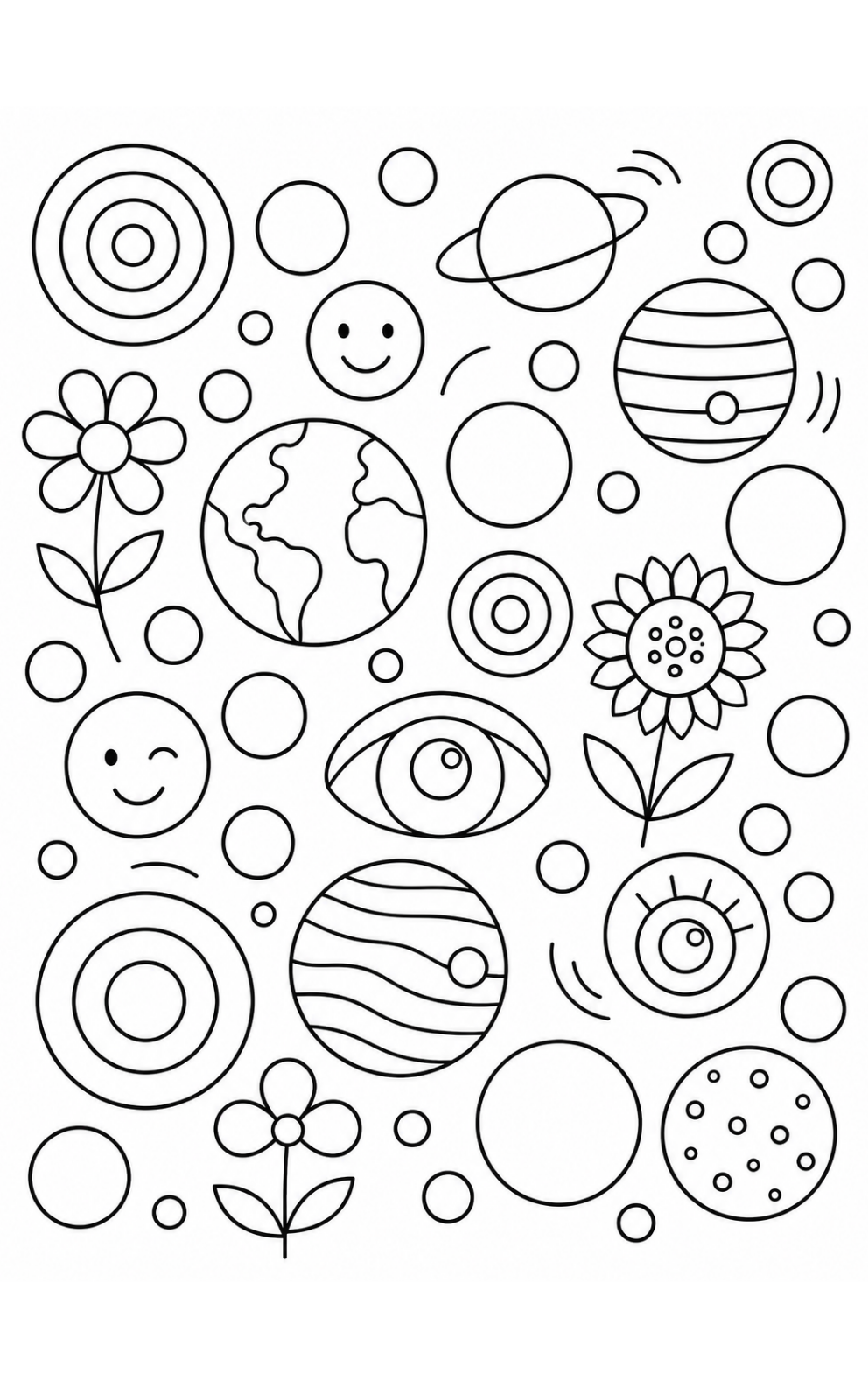
Part 1 — Circle Practice
Drawing perfect circles is your most important skill, and practice is your greatest teacher—after Smudge.
- Start with a perfectly prepared canvas.
- Set up your compass using Smudge’s techniques.
- Fill the page with circles of many sizes.
- Make a few concentric rings with the same centre.
- Try inside-out, from small to large, then outside-in, from large to small.
- Aim for even, unbroken lines. Correct any wobbles with calmer hands, not harder pressure.
Repeat, refine, improve—practice turns wobbles into wonders. Small loops today, grand mandalas tomorrow.
Part 2 — Circle Art
Now it’s time to turn practice into art. Your page of circles is more than an exercise—it is an art piece waiting to come alive.
- Look over your circles and imagine what they could become.
- Choose a few to transform: flowers, planets, eyes, bubbles—anything you like.
- Add details, colours and patterns inside and out.
- Connect circles with lines or shapes.
- Keep going until your page feels full of life: a celebration of every circle you have drawn.
There we go! From practice to perfection and beyond. Sign and date your artwork. Keep it proudly in your room—or frame it and give it to someone special.