
Grid System
Story Grids are an experience-first approach to learning.
Each Grid explores one broad area of life, such as making sense of problems, managing emotions, building relationships, making decisions or adapting to change.
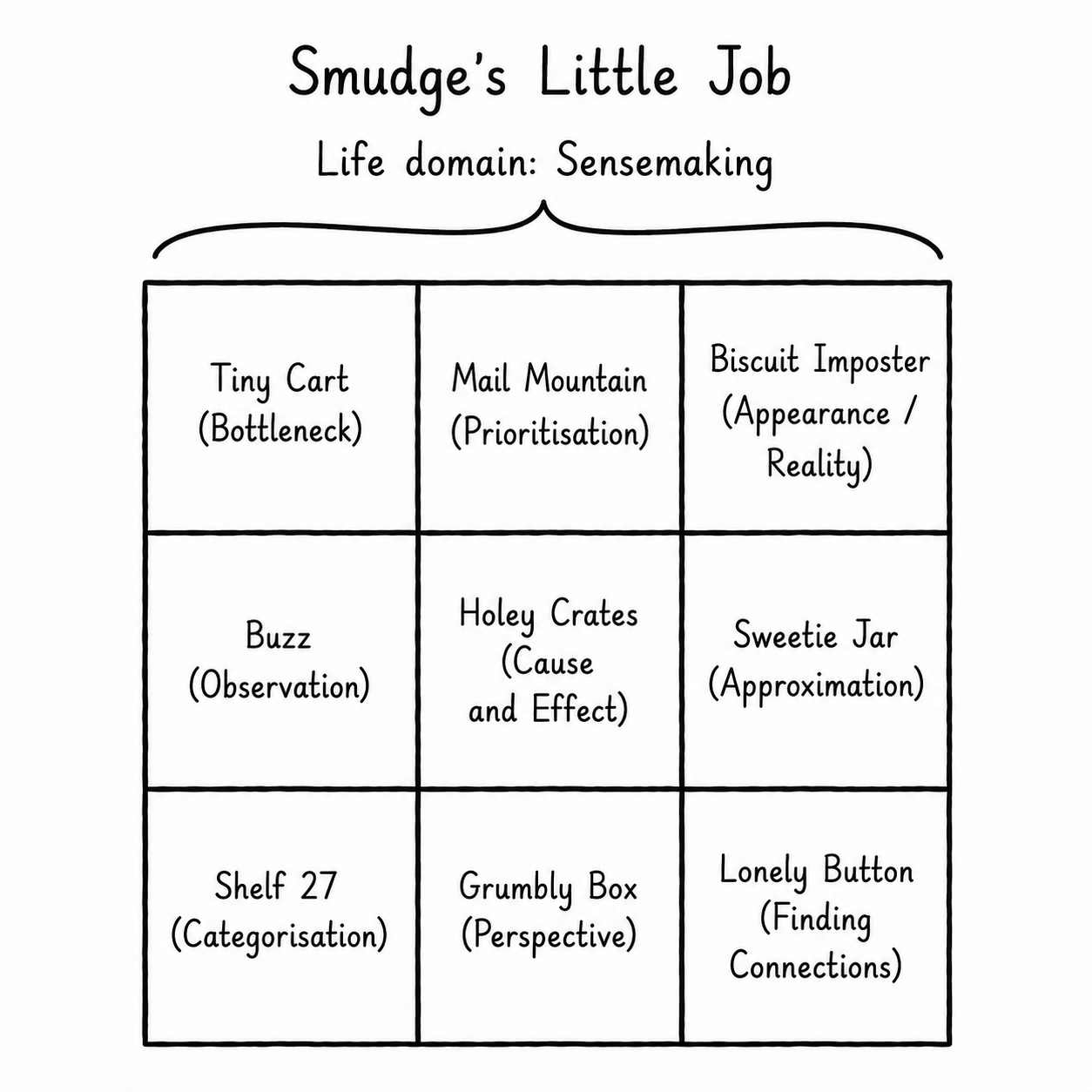
This approach inverts the usual educational sequence: encounter first, response second, concept articulation last.
That’s what makes the Grid System so different.
They aren’t skills looking for a use; they’re everyday encounters through which competence develops. Language attaches only after something is seen and used.
The Child-Facing Experience
At the child-facing level, Story Grids are extraordinarily simple:
- Pick a story square, complete the story and activities, and collect its fragment.
- Complete all nine stories to reveal the Grid symbol.
- Use the symbol to tie the stories back together.
- Complete the final activities to connect the Grid to your own life.
That is the complete learner journey, with minimal cognitive load at any one step in the process.
Beneath this simple framework, however, the Grid carries considerably more educational purpose, operating across connected layers at once.
Story Grids operate simultaneously as a map of parts and a compression of the whole.
Let’s take a look at how they work.
Story Layer
Expansion
One life domain → nine encounters → nine domain competencies
Essentially, each Story Grid explores one broad life domain:
- making decisions;
- adapting to change;
- dealing with uncertainty;
- and so on.
The Grid presents nine encounters within that life domain, each explored through one story. The learner encounters the domain piece by piece, in concrete situations rather than as an abstract definition.
The life domain of Smudge’s Little Job is sensemaking.
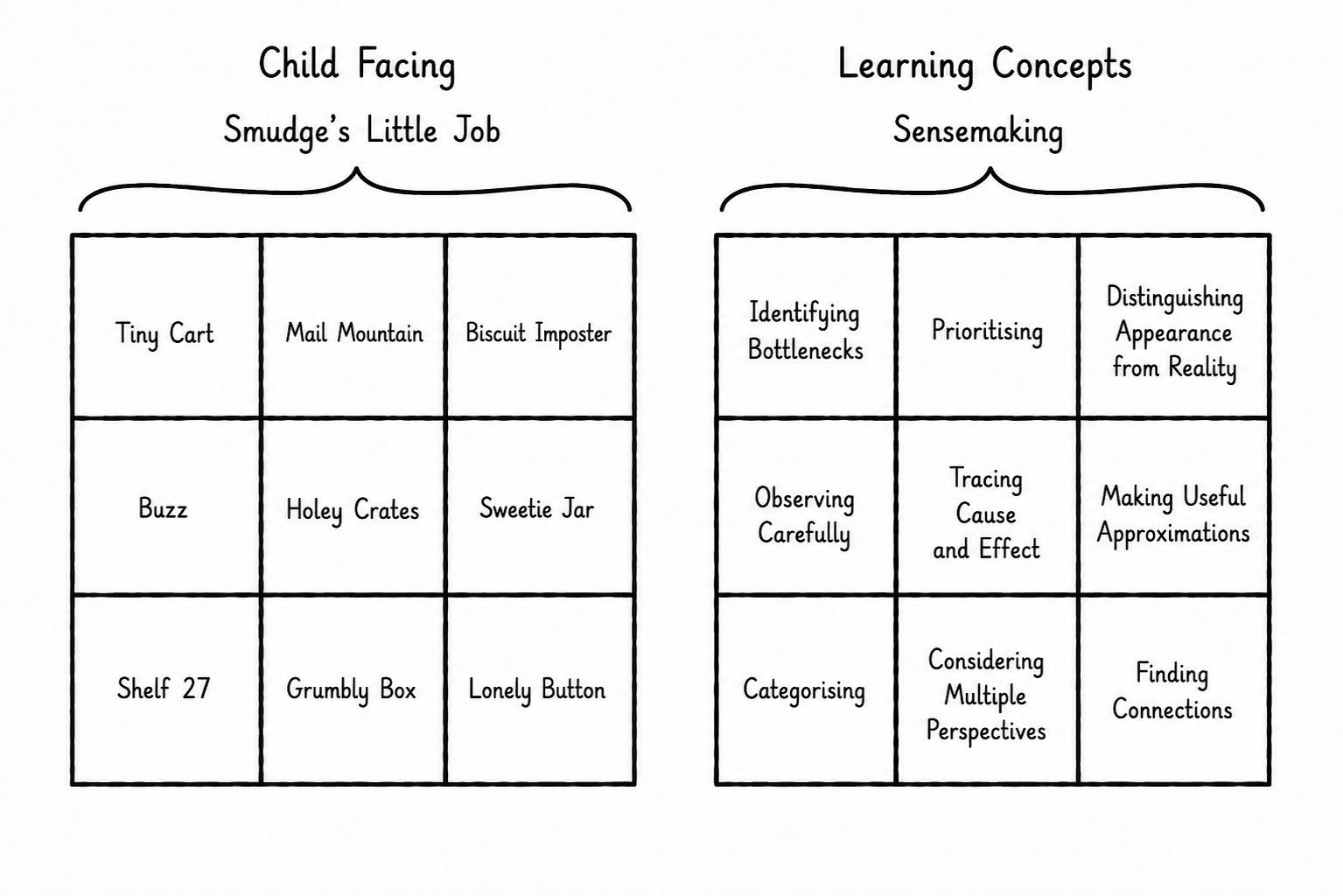
Each square—or story—is one recognisable encounter within the life domain. The encounter indirectly nurtures awareness and competency through a three-step process:
- Awareness: What is happening?
- Application: What can we learn?
- Transfer: Where else does it apply?
The educational concepts remain unnamed throughout discovery and are named only after experience. Language attaches to the seen and experienced, not the theoretical and abstract.
Symbol Layer
Compression
Nine fragments → one symbol → meaning of the domain
The second layer is the symbolic layer. Completion of each story and its activities contributes one fragment to the final domain symbol. When the nine fragments are assembled, the symbol compresses the shared meaning of all nine encounters into one memorable form.
Symbols are memorable because they compress many related experiences into a single mental image. Rather than remembering nine separate lessons, the learner remembers one symbol that can later reactivate the interconnected competencies it represents.
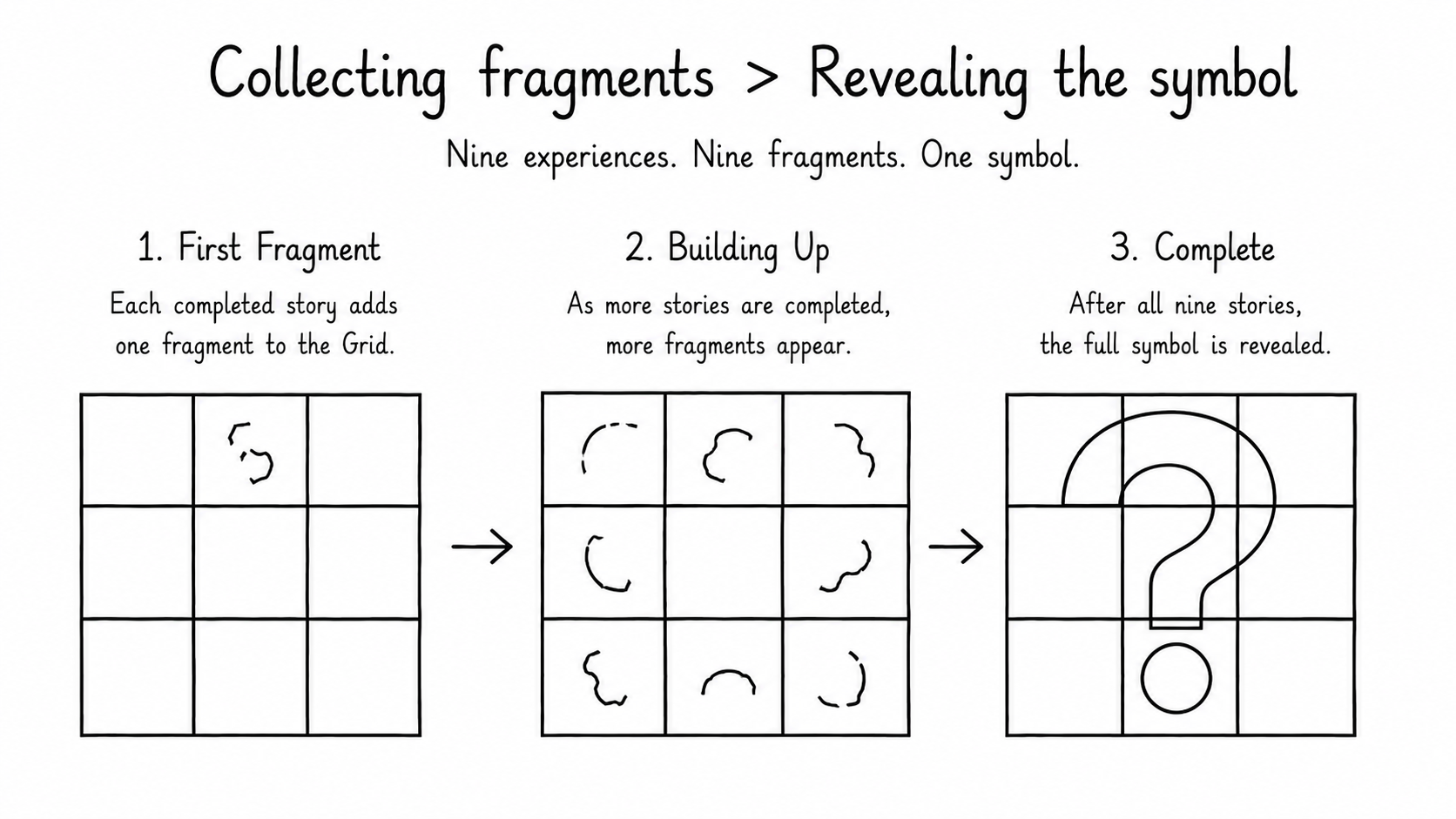
In this example, the final symbol is a compass—a symbol of finding your way through a problem: making sense of what is happening, finding your bearings and deciding how to move forward.
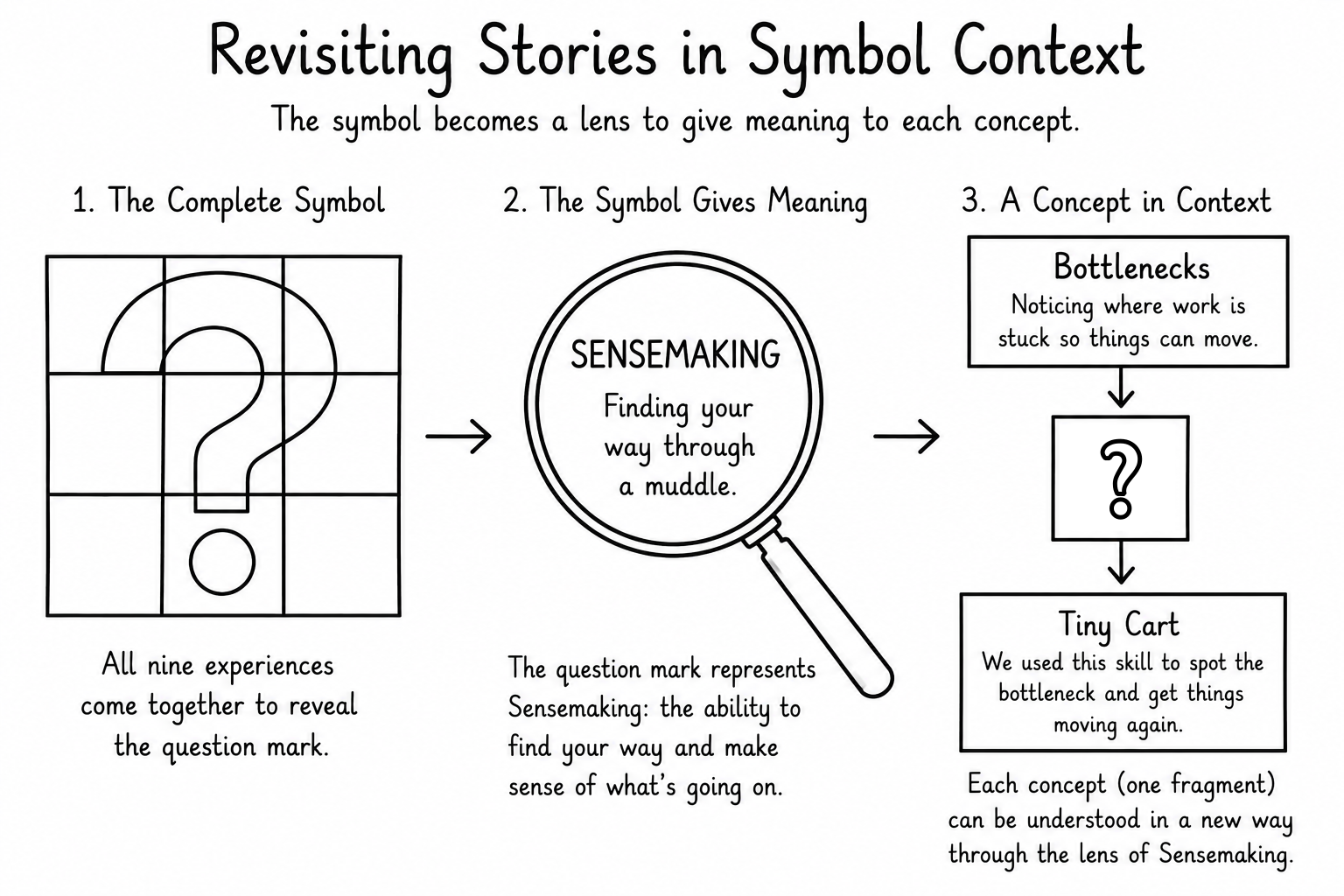
When the symbol is understood, it gives the nine experiences a shared meaning. Each encounter can then be revisited and understood through the lens of that meaning.
Interpretation Layer
Interpretation
One symbol → meaning of the domain → nine interconnected domain competencies
The final layer completes the learning cycle. Once the symbol has been revealed, it becomes a lens through which the learner can reinterpret every encounter.
Rather than remembering nine separate stories, the learner now sees how each one contributes to a broader understanding of the life domain. The individual competencies become connected parts of a coherent whole.
The final activities then extend this integrated understanding beyond the Grid, helping the learner recognise how the same competencies have appeared—or might appear—in their own past, present and future experiences.
The Learning Cycle
Complete process
Domain → Encounters → Symbol → Domain
The learner is situated within a broad life domain, experiences it through nine encounters, assembles those encounters into a single symbol, and then returns to the encounters with a more integrated understanding of how they connect.
The final transfer activities then carry this integrated understanding beyond the Grid and into the learner’s own life.
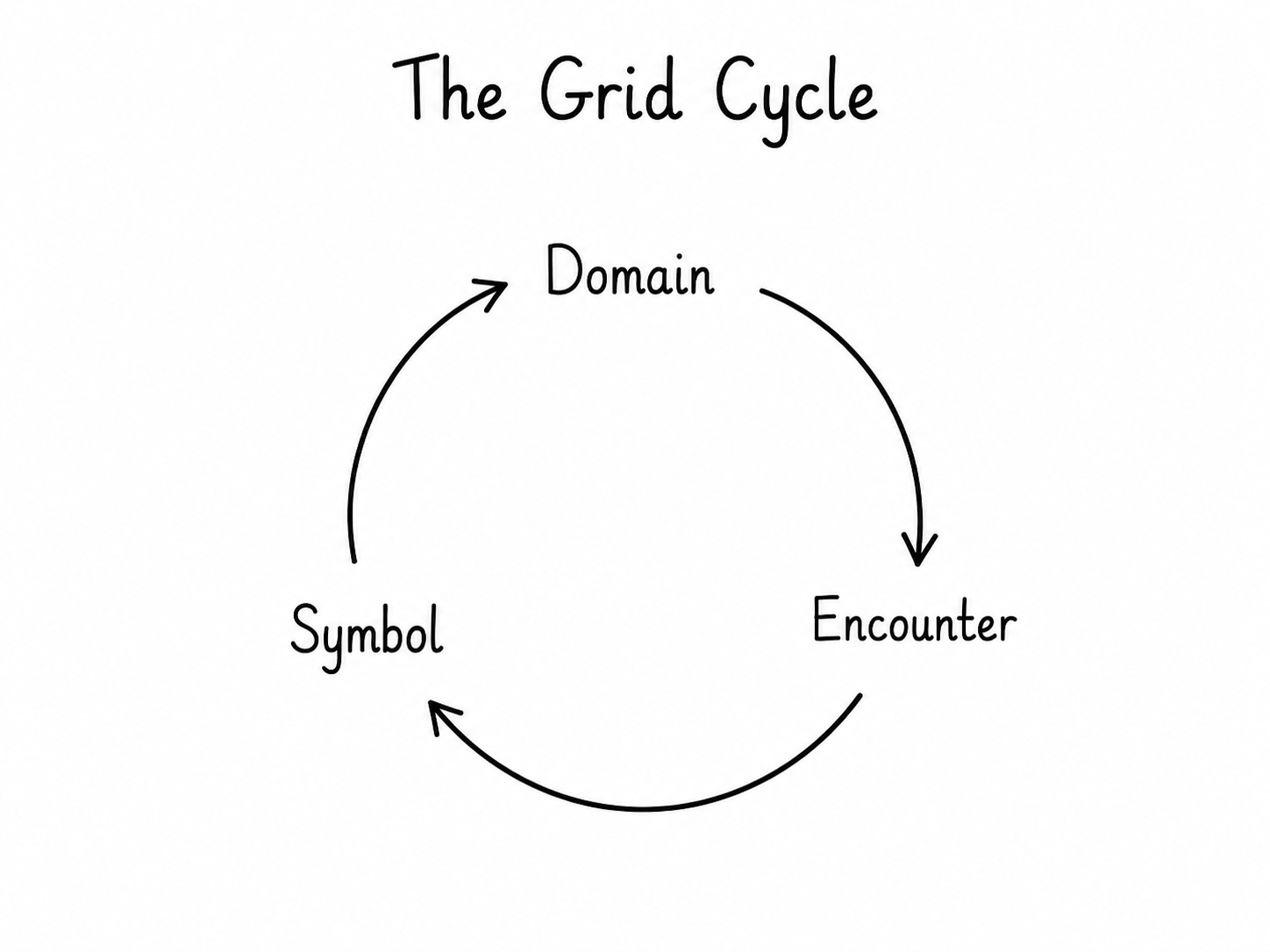
The experience of a Story Grid can therefore be summarised as:
- The life domain shapes the encounters.
- The encounters reveal the symbol.
- The symbol deepens the learner’s understanding of the life domain.
Summary
- A Story Grid focuses on one life domain.
- The Grid presents nine encounters within that domain.
- Each encounter reveals a different aspect of it.
- Completing all nine reveals the symbol of the life domain.
- The learner then revisits the encounters with an integrated understanding of how they connect.
- The final activities help the learner connect this understanding to their own life.