
Mandala School

Welcome to a rainforest school where drawing begins with a single circle.
Mandala School is a story-and-activity adventure for curious young minds: 28 illustrated chapters filled with circles, patterns, colour, small creative challenges and a rather chaotic class of animal pupils.
The complete digital book is free.
What’s Inside?
Begin with one circle and see where it leads.
- A Story
- Activities
- Creations
Mini Mandala
More Mini Mandala
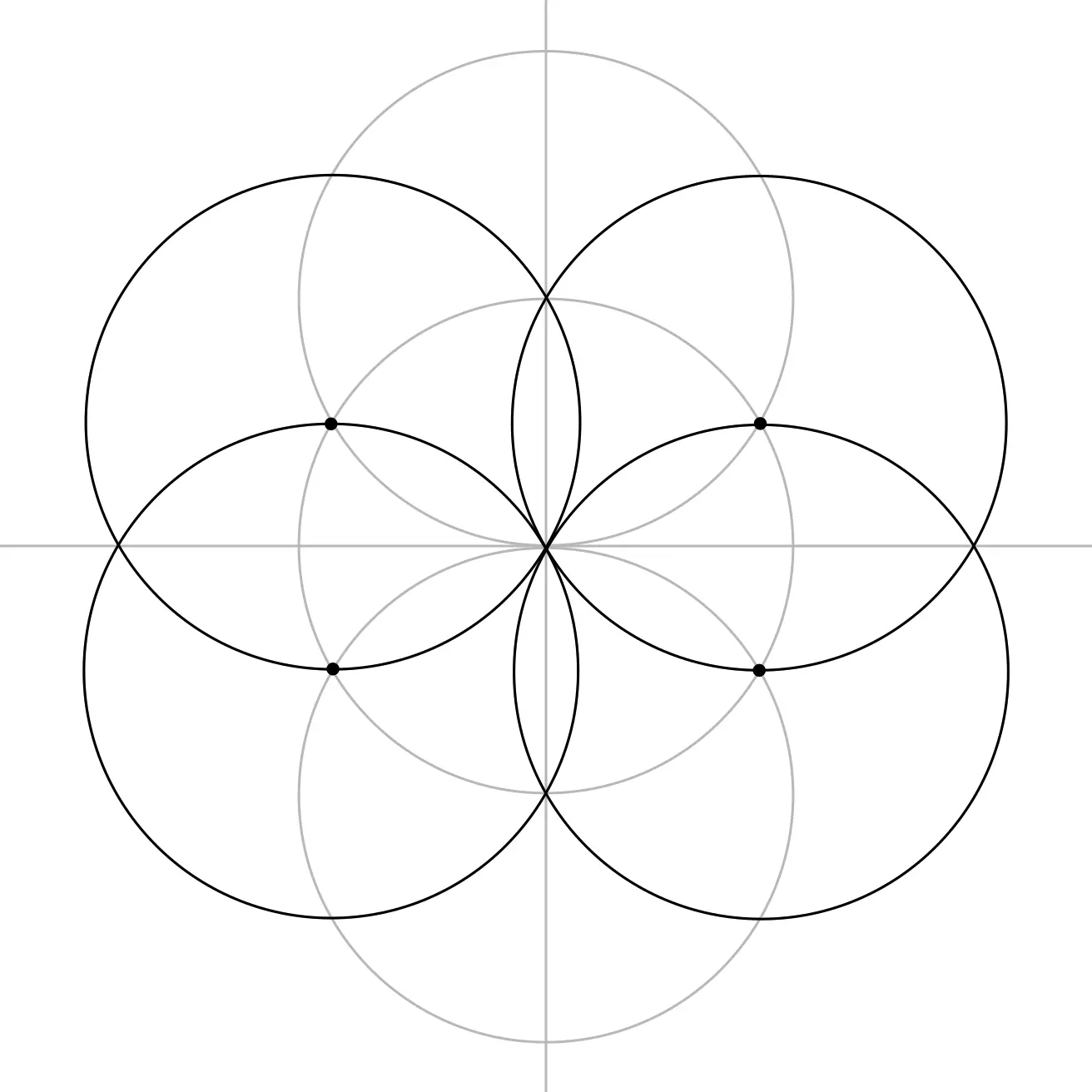
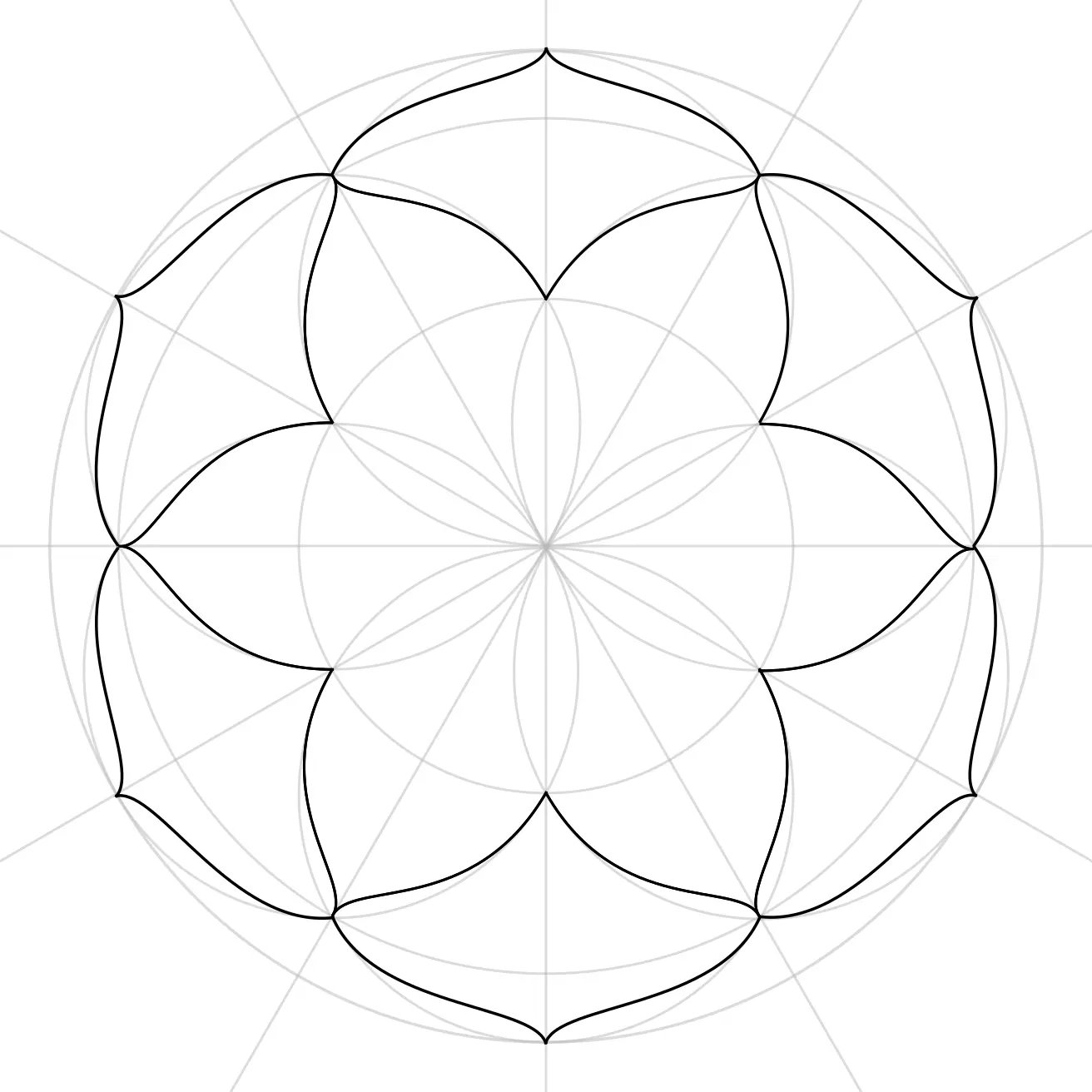
Main Mandala

Free & Offline
Complete digital editions are free, and designed to be taken away from the screen.
Read 12 Chapters Online
Begin the adventure here with twelve complete story-and-activity chapters. You can read at your own pace, then download the full book whenever you are ready to continue.
Continue the Complete Adventure
The complete book continues from Ripples & Rays through to Graduation and Winners, with sixteen more illustrated story-and-activity chapters to explore.
The complete PDF, EPUB and paperback options are waiting at the top of this page.
Welcome
Welcome to An Interactive Adventure in Sacred Geometry! This is more than just a book—it’s an adventure into the hidden secrets and timeless beauty of geometric patterns.
Through step-by-step instructions and creative tasks, you’ll uncover the connections between shapes, symbols and the world around us.
What You’ll Need
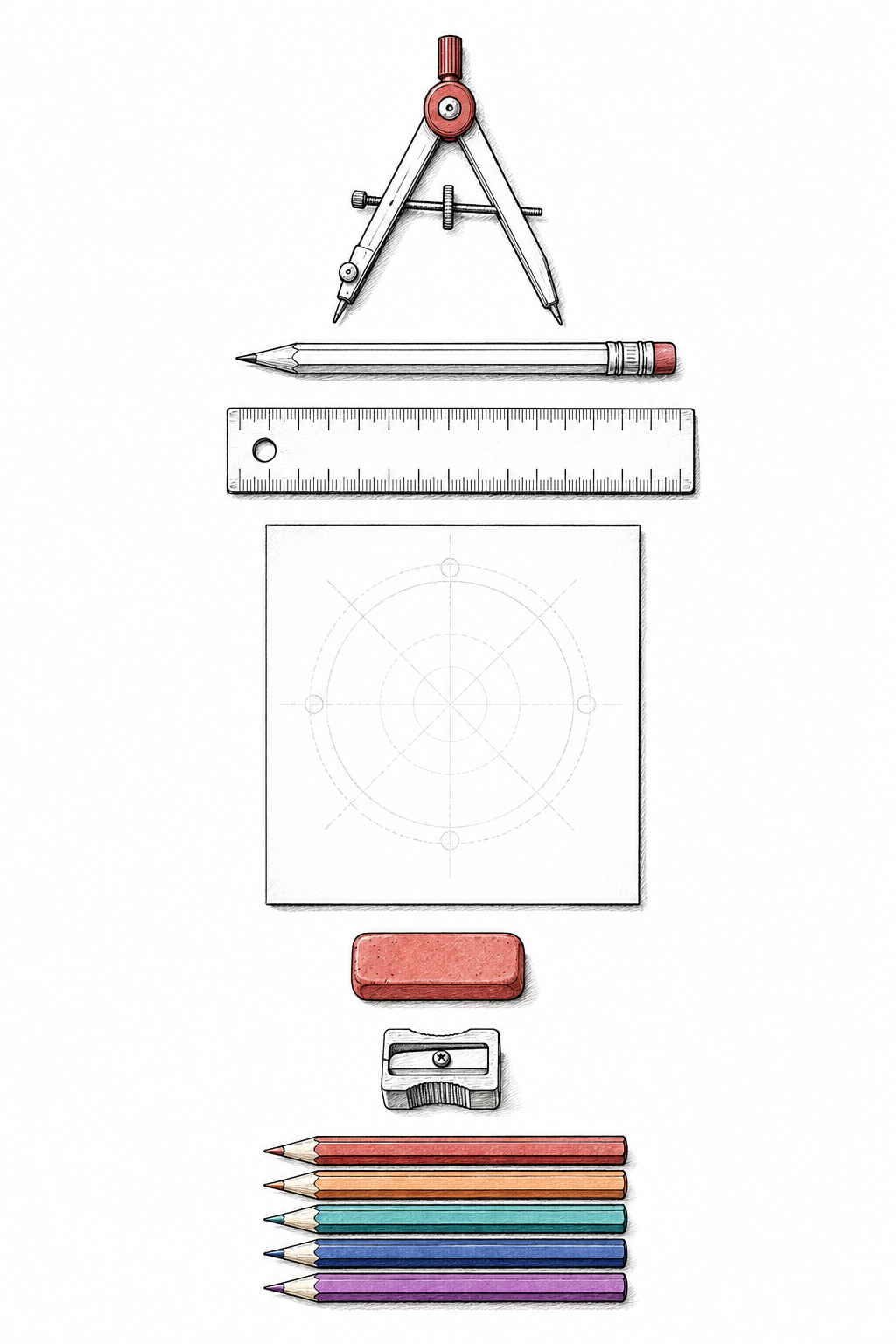
To join the journey, gather a few simple tools:
- Blank paper — your canvas for creation
- Tape — for securing your paper
- A pencil and sharpener
- A ruler
- A compass — for drawing perfect circles
- A rubber — for refining and perfecting
- Coloured pencils or pens
With these tools in hand, you’ll explore sacred geometry one design at a time.
Let the journey begin!
Bong
As dawn broke, rain fell heavily on the Sanctuary of Symmetry, a great temple in the heart of the rainforest. Its walls were etched with intricate geometric carvings—circles within circles, spirals within spirals, and patterns so precise they defied belief.
The rainforest itself was alive with splendour too. As the morning rain began to ease, animals emerged one by one from the dripping jungle. Orangutans swung lazily between slippery vines. Bright blue butterflies darted through the mist, while scarlet macaws painted flashes of red across the grey sky. Every creature, great and small, added its own colour, character and call to the waking forest.
Back in the temple, Smudge—the temple master—slowly opened his eyes after his morning meditation. He looked at his watch—worn proudly on the wrong wrist, because he liked it that way—and nodded. It’s time.
He rose to his feet and began to prepare. With a broom in one hand and a feather duster in the other, he cleaned the temple from top to bottom. He dusted the tables, lined up the pencils and set out the tools for the day’s work. With everything finally in place, Smudge stood back and nodded.
“There,” he said proudly. “I think we’re ready.”
Satisfied with his work, he walked over to a glass cabinet in the corner and carefully lifted out a huge mallet. It was large—comically large—so large, in fact, that his little legs wobbled as he made his way across the temple floor to an enormous gong.
Smudge raised the mallet and gulped. “Here goes nothing.”
He swung delicately—missed entirely—and somehow managed to bong not the gong but himself.
“Oof,” he groaned, rubbing his head as he glared back at the gong, thoroughly unimpressed.
Smudge reassured himself that he had meant to do that—and that it was, after all, an important part of the ceremony.
After a second attempt—this time successful—the mallet connected with a deep, resonant BOOOONG.
The sound rolled across the temple floor, rising through Smudge’s sandals, into his legs and up to his chest. His heart swelled with joy—as if the sound itself carried nothing but happiness.
The walls thrummed, the windows hummed, and far beyond the Sanctuary, the rainforest itself seemed to pause and listen. The call of the gong rippled through the trees, across the rivers and out into the farthest corners of the jungle.
“What was the gong for, you may be wondering?” Smudge grinned. “Well… the gong meant only one thing: it was time for school—Mandala School.”
Bong Your Own Gong
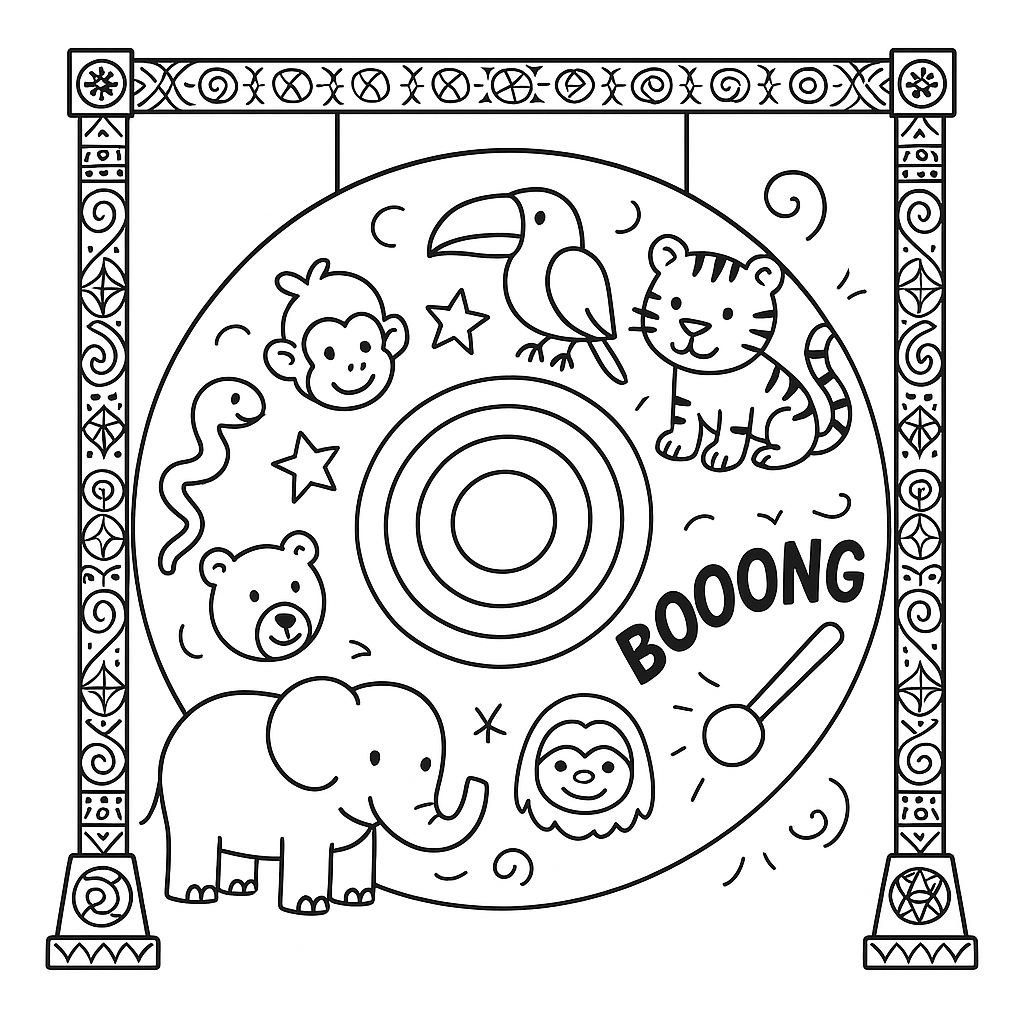
Before Mandala School begins, every student needs a gong to start their day—including you!
- Grab a blank page and a pencil.
- Freehand a big circle in the middle—it can be round, oval or lopsided. Smudge would approve of all three.
- Add decorations: spirals, stars, zigzags or even tiny animals.
- Colour it however you like—shiny gold, rainbow stripes or even invisible ink if you’re feeling mysterious.
And if you’re feeling a bit lazy, no worries—you can use the templates instead. Smudge won’t judge you… yet.
Now the fun part: take your pencil, hold it like a mallet, and bong your gong with one good tap.
Make the deepest gong sound you can. Go on—a long, rumbling BOOOOOONG. Let it echo through your room, your home and maybe even your rainforest, if you have one.
Congratulations—you’ve sounded the call. Class has officially begun!
Registration
The gong’s last vibrations faded, leaving the Sanctuary of Symmetry perfectly still. Smudge took a deep breath, shuffled to the front of the temple and stood at his desk.
Atop it lay Smudge’s most important teaching treasures: his chalk, a box of geometry tools and a thick leather-bound book.
He admired the swirling patterns on the book’s cover for a moment, then slowly opened it. Inside, written in neat columns, were the names of every animal in the rainforest—his brand-new class list. He tapped the wrong end of his pen against the page and frowned. Now… where are they all?
Smudge’s eyes darted around the temple and landed on a woven basket tucked in the corner. His face brightened as he realised that one student was indeed already present.
That student was Biscuit—Smudge’s faithful dog. Biscuit was always here—or there—with Smudge.
Smudge cleared his throat and put on his most official teacher voice.
“Biscuit?”
Biscuit sat bolt upright and thrust a paw into the air, as if he had been waiting seven dog years for this very moment. Then, with perfect timing, he gave a single sharp bark that echoed around the chamber.
Smudge chuckled, ticked Biscuit’s name in the register and nodded with satisfaction.
“Right then,” he said proudly. “Present and correct, Biscuit. Present and correct.”
Mandala Register
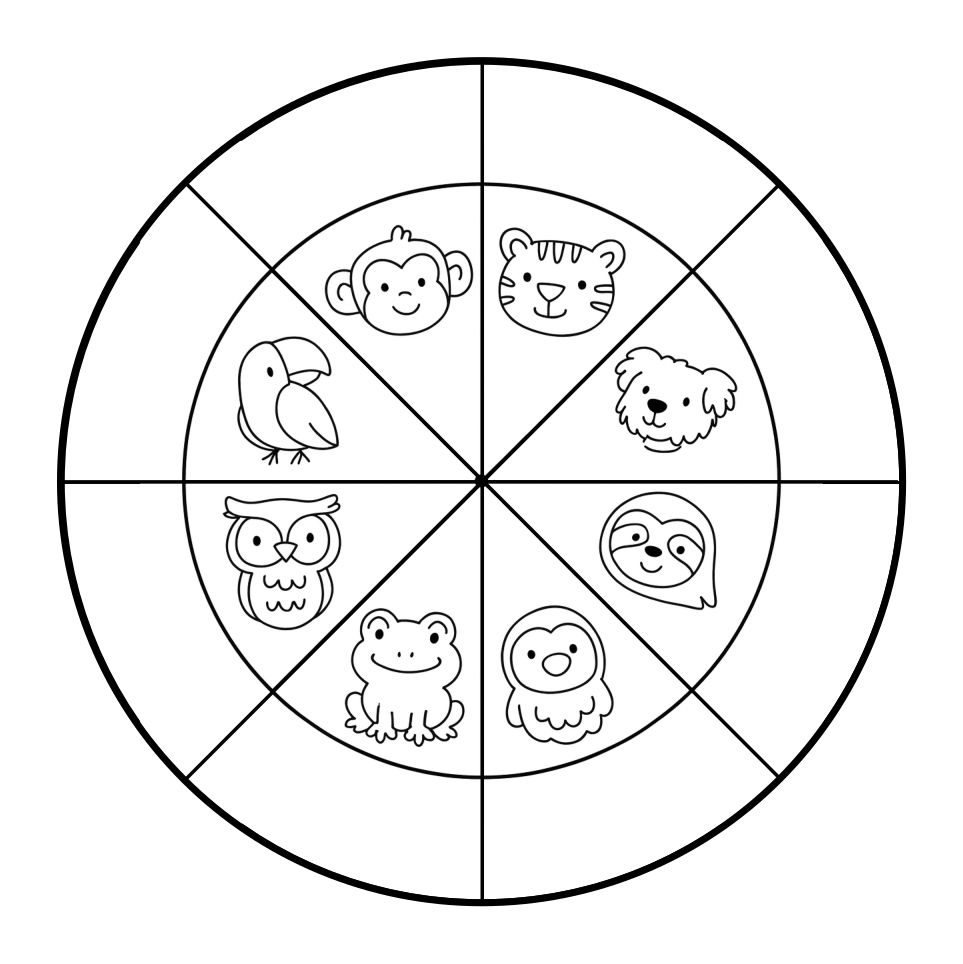
Now it’s your turn to make a register—but not an ordinary one. This is Mandala School, so your register will also be a piece of art.
- Mark the centre of your page with a small pencil dot.
- Draw a large circle around it, roughly in the middle of the page.
- Draw an even larger circle around that. The space between the two circles will become your checkbox.
- Draw straight lines through the centre dot to divide the circles into slices—like pizza, cake or anything delicious you may be thinking about right now.
- Inside each slice, write a name or draw a tiny picture. Each slice is for one classmate. Who would you like to attend?
When you’re done, you won’t just have a register—you’ll have a Mandala of Attendance. Everyone is different, yet everyone belongs together in the same circle.
That means your class is not just ready… it is in perfect harmony.
Right?
Chaos
Smudge sat at his desk. Biscuit sat in his basket. Both very quiet. Too quiet.
Smudge looked at Biscuit. Biscuit looked at Smudge. Smudge raised his eyebrows. Biscuit raised his eyebrows. Then—
Cheep!
From high in the rafters came the tiniest of sounds. A bright little bird tilted its head and chirped again, more aggressively this time.
CHEEP!
Smudge glanced up at the bird, then down at his register. He fumbled with his pen before hurriedly finding the name.
“Okay, okay—check, little angry bird!”
After a few moments of awkward silence together, all three—Smudge, Biscuit and the little angry bird—turned their heads towards the pitter-patter of teeny-tiny feet.
A small mouse scurried across the tiles, scrambled up a chair leg and perched proudly on the best seat in the house.
“Check, little mouse!” Smudge called, ticking off another animal.
Then came a raccoon, a deer and an owl.
“Check, check… check!”
What began as a trickle soon became a flood.
Parrots swooped through the windows like flying rainbows. Jaguars slipped inside like shadows. And the monkeys—of course—bounded in wherever and however they could.
Smudge raced to keep up. “Check, check, check!” His eyebrows climbed higher with each new arrival.
The room was now a wash of squeaks, growls, oinks and barks.
Luckily for Smudge, he had spent many years learning animal languages… though sometimes it was more a curse than a blessing.
The parrots were terrible gossips, the monkeys couldn’t stop interrupting, and the frogs—well, the frogs were the worst. A single drop of rain and they’d drone on and on and on… and on.
Amongst the commotion, the sloth slumped into a chair at the very back with a heavy sigh. His eyes drooped closed, but at least he had shown up.
“Biscuit,” Smudge said calmly, breaking from his furious checking. “Coffee. For the sloth. Immediately.”
Biscuit ruffed once, then vanished into the kitchen at full tilt.
Smudge returned to his register, but try as he might, he just couldn’t keep up. His eyebrows had reached their limit; he had no choice left.
With a dramatic flourish, he scrawled one giant line across the page:
ALL ANIMALS—CHECK!
Circle of Chaos
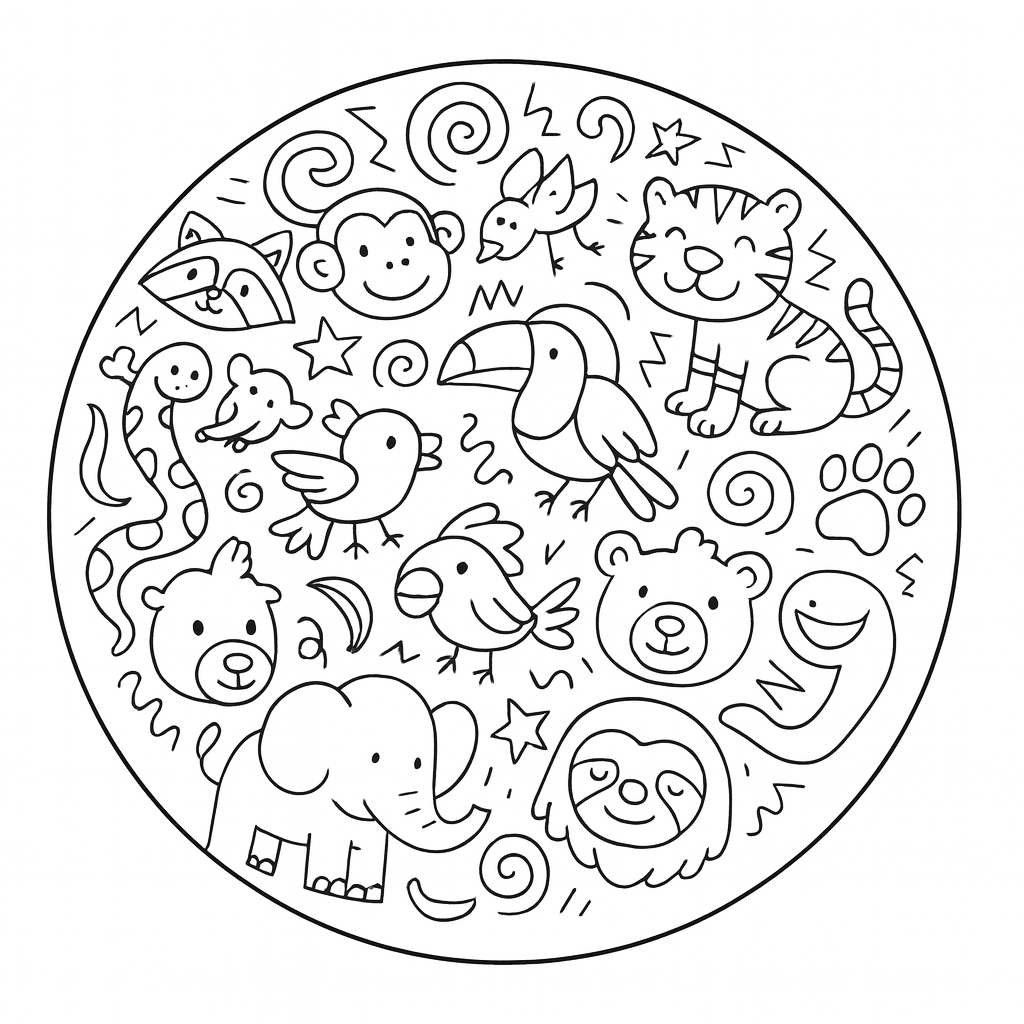
Smudge can’t keep up—but can you? Circle up the silliness before it escapes!
- Draw a large circle on your page.
- Inside, pack it full of animals—squeezed, squashed, tumbling, climbing and piling wherever they will fit.
- Let tails tangle with wings, paws press against trunks and heads pop up at funny angles. The only rule is that everyone must be inside the circle.
- Add decorations in the gaps—spirals, zigzags, stars or anything else to fill the empty spaces.
- Colour it as wildly as you like.
When you’re done, you’ll have a noisy, silly, crammed-full circle of life—proof that even the wildest chaos can be tamed by a circle.
Whiskers
Smudge slammed the register shut with a puff of dust and looked extraordinarily pleased with himself.
“All present and correct!” he declared—then quickly backtracked. “Sorry, wait, wait… there’s one more.”
Of course there was.
The latecomer, as always, was Whiskers, the temple cat, who insisted on being fashionably late. She was technically always there, but waited out back, pretending not to be.
Smudge leaned towards the door and gave a comically loud whisper. “Psssst! Whiiiskers!” That was her signal.
Whiskers glided in from the next room, stepping delicately onto a rolled red carpet. The carpet led to a velvet cushion, placed with mathematical precision—using the golden ratio exactly—because anything less would have been beneath her.
It took her an absolute age to reach it, pausing to admire herself in every shiny surface along the way. Upon arrival, she circled the cushion once or twice before curling up gracefully, flicking her tail and giving a delicate yawn.
“Right then,” said Smudge. It was obviously unacceptable for Whiskers to be lumped under All Animals, so he created a special entry in the register. “Whiskers?”
“Rrready,” she purred.
Whiskers’ Magnificent Entrance
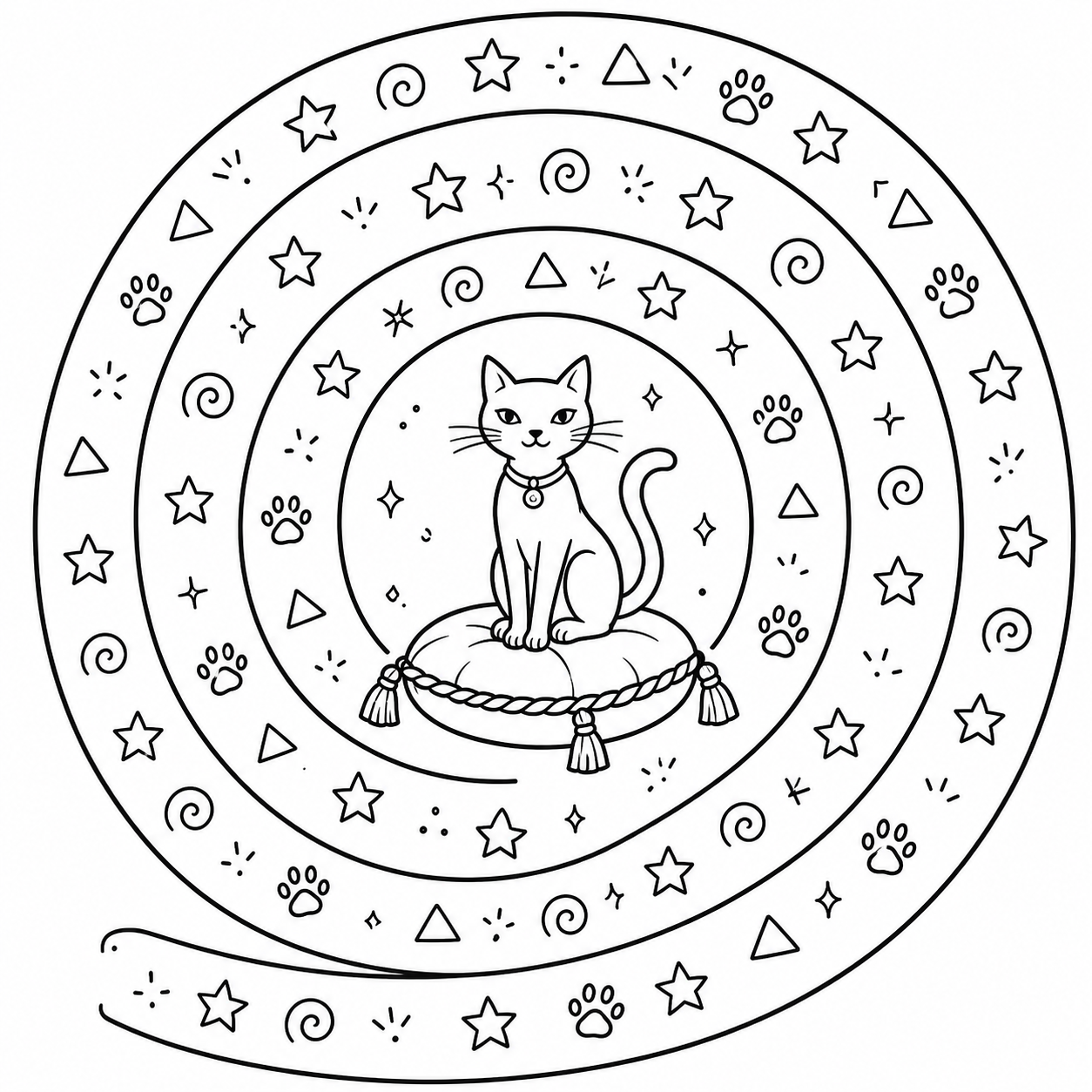
Whiskers could never be expected to stroll in like everyone else—that simply would not do. Her arrival has to be grand. Can you make it so?
- Start with a fresh, blank page, ready for Whiskers’ grand arrival.
- Draw a long red-carpet line that spirals from the edge of your page towards the very centre.
- At the end, add Whiskers’ cushion: a little circle, a jewel shape or anything else suitably splendid.
- Decorate the carpet with repeating patterns—triangles, spirals, stars or paw prints.
- Hold it up. You have made a path that flows towards the centre, guiding the eye straight to the star of the show.
Whiskers flicked her tail in approval. “Magnificent,” she purred. “An entrance worthy of me… almost.”
Mandalas
Smudge stood tall—or as tall as he could manage—at his desk and looked out at the crowd of animals now packed into the Sanctuary of Symmetry.
“Right then,” he said, clapping his hands together. “Welcome—welcome, one and all—to Mandala School. The place to learn everything there is to know about mandalas.”
“What’s a mandala?” the flamingo asked, wasting no time.
It was a good point—and a fair question.
“Straight to it, long-legs!” Smudge said with a smile. He picked up his chalk and drew a big, bold circle on the board.
“The word comes from an ancient language called Sanskrit,” he explained. “And it means… circle.”
“A circle? That’s it?” the jaguar scoffed.
“Not just any circle,” Smudge said, puffing out his chest. “A mandala is a circle that can hold patterns, stories and sometimes the whole universe.”
Gasps fluttered through the room, and the animals erupted in disbelief.
“The whole universe?”
“He didn’t say the whole universe, did he?”
“He did!”
“Is he mad?”
“Smudge has gone mad!”
Smudge pinched the bridge of his nose, breathed deeply and tried to get back on track.
“Look closely at the walls around you.”
Heads turned. The Sanctuary’s stone walls shimmered with concentric circles—spirals and starbursts rippling outwards from tiny centres.
“These,” Smudge explained, “are mandalas. At the very centre is the starting point. It looks like nothing—and it is nothing, just a dot. But from that nothing, everything grows. Rings ripple outwards like water, each one carrying infinite potential.”
He pointed to the chalk circle. “You see, a circle has no beginning and no end. There’s no place to start and no place to finish. And that’s why a mandala can hold everything—your family, your friends, your dreams… even the stars above. From the tiniest dot to the widest ring, it’s all connected. The circle—like the cycle—never ends on the page or within you. That’s the magic of mandalas.”
Spot the Mandala
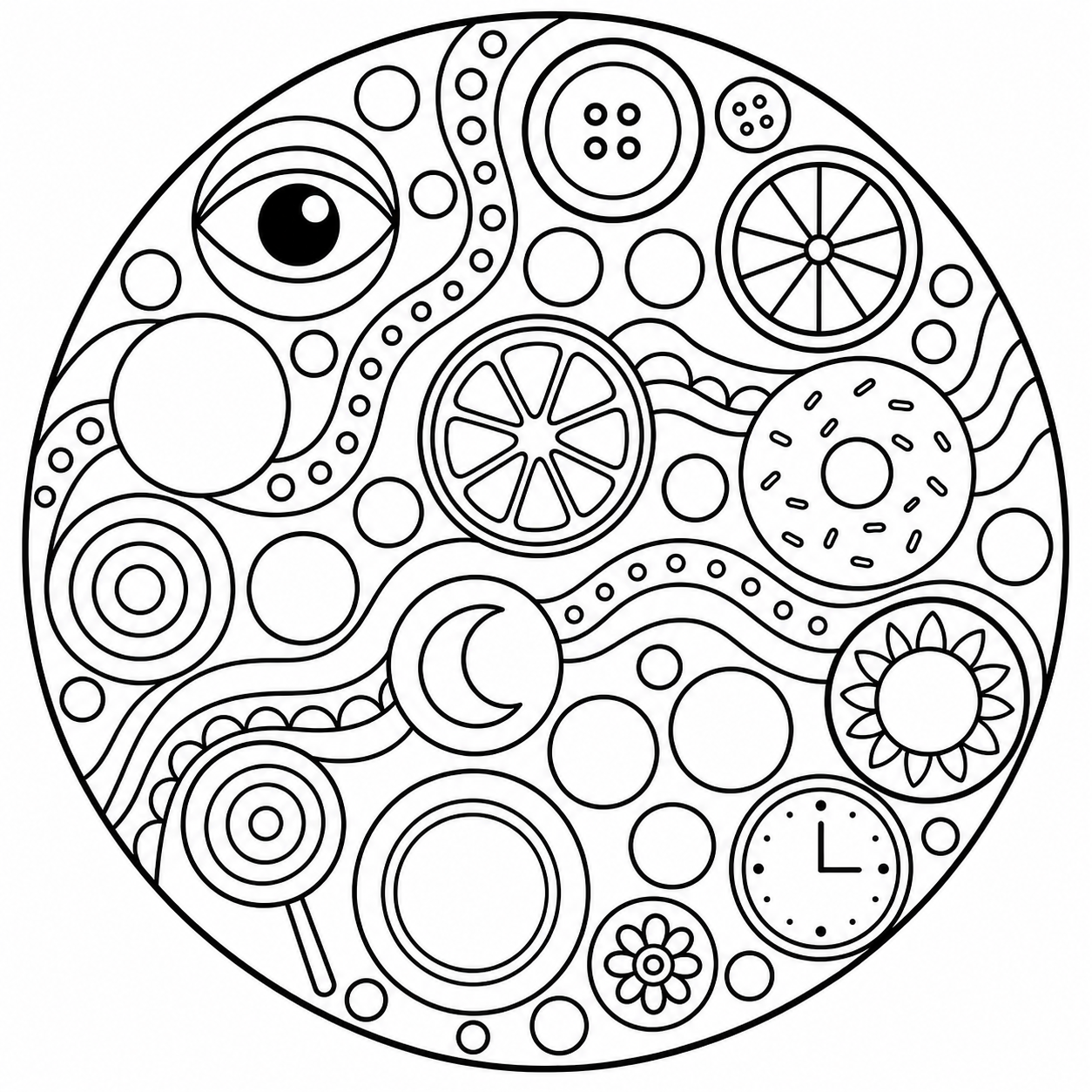
Before we learn to create our own mandalas, let’s train our eyes to see them in the world around us.
- Look around your room or out of a window.
- Spot as many circles as you can: wheels, buttons, plates, the sun, the moon—even your eyes.
- Draw them on a fresh page, one by one, until you have made a collection of circles.
- Enclose them all with one giant circle.
- Join them together with lines or patterns.
Now look again and try to find where each one begins or ends. You can’t! That’s the magic of circles—just like Smudge said, they go on and on.
Reasons
“Why, why, why?” muttered Smudge as he paced up and down in front of the chalkboard.
The animals looked at him a little strangely.
“Why what?” asked the hedgehog, blinking.
Smudge grinned. “Well, my little spiky friend—now we know what mandalas are—why should we make them? You could be out all night spiking people instead!”
Hmm, he had a good point, the hedgehog thought. I do like spiking… especially the monkeys. They were very annoying sometimes.
“Well,” Smudge continued, pointing to a particularly beautiful mandala on the wall, “there are a few very good reasons.”
“First, mandalas help us to slow down. Life can be busy, noisy and messy. But when you draw a mandala—following a circle, round and round—everything suddenly feels… calmer.”
“I do like calm,” said the hedgehog, stretching out his little arms.
“OUCH!” squeaked the mouse beside him after receiving an accidental spike.
The hedgehog leaned in for an apologetic hug.
“NO!” yelped the mouse, scrambling backwards.
“Careful, Hedgehog—please!” said Smudge gently.
“I apologise,” muttered the hedgehog, folding his arms and legs tightly. “Do continue.”
“Second,” Smudge went on, “mandalas help us to focus. Look at these repeating patterns—dots, triangles, spirals. Your hand makes them, but your mind is the one paying attention. It’s like training your thoughts to walk in a straight line instead of bouncing all over the place like…” Smudge glanced at the monkeys.
They froze, grinning guiltily and scratching their heads with exaggerated innocence.
“Exactly that,” Smudge said.
“And finally,” Smudge continued, sketching a rainbow of spirals, “mandalas are fun. They can be bright and bold, messy and colourful, or neat and tidy—it all depends on the maker.”
“The best bit? Mistakes don’t spoil them—they spark new patterns. A smudge here, a wobble there… and suddenly you’ve invented something brand new.”
Why Mandalas?
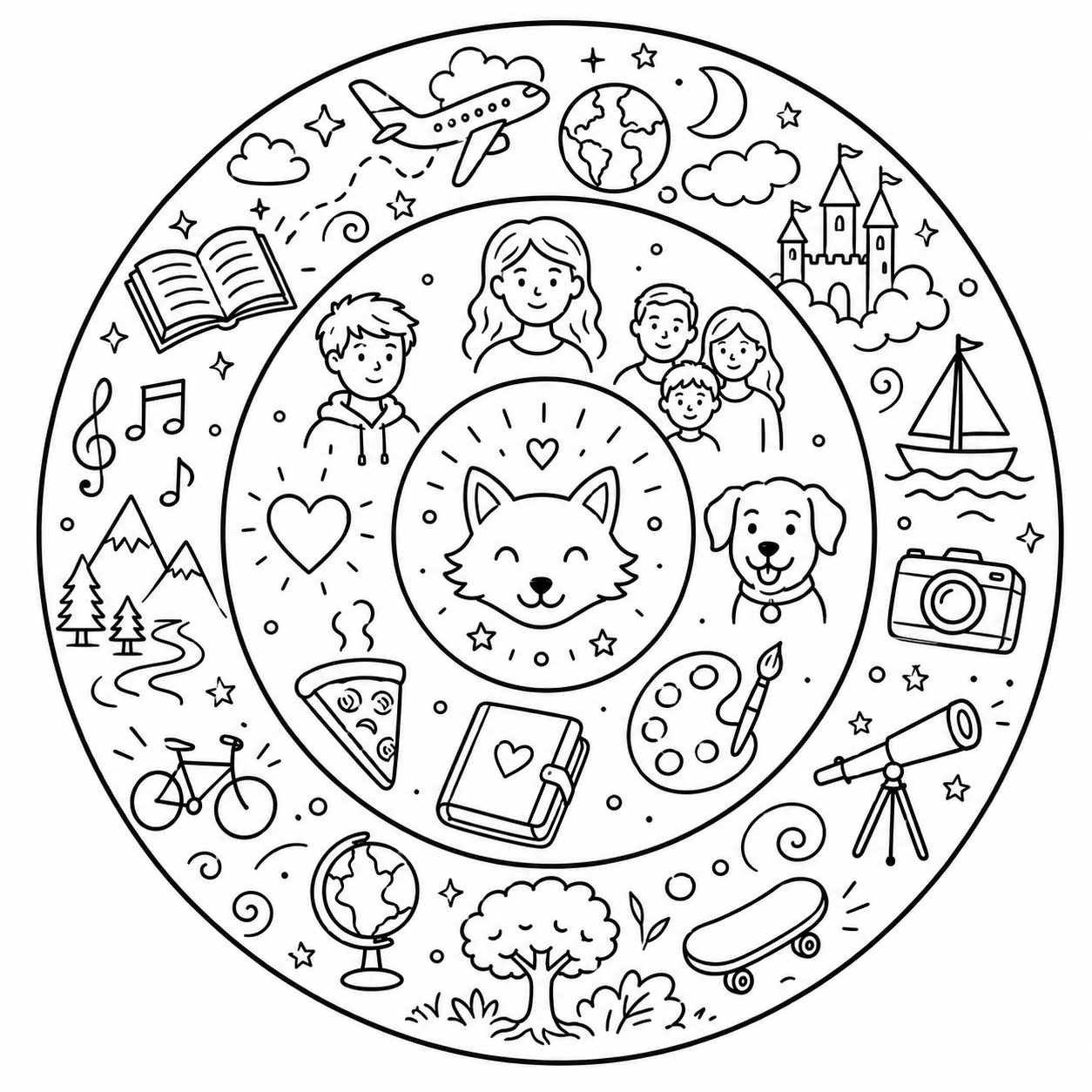
Mandalas can hold meaning as well as beauty. Let’s try one that tells your story.
Imagine this mandala as a map of you: the centre shows who you are, the middle ring shows what supports you and the outer ring shows your dreams.
- Draw three circles with the same centre: small, medium and large.
- In the centre, draw something that represents you.
- In the middle ring, draw symbols for what helps you most—friends, family or favourite things.
- In the outer ring, draw your dreams: things you would like to learn, places you would like to go or even silly wishes, such as unlimited ice cream.
- Add patterns and colours to tie it all together.
Place it centre stage—you have created a mandala that is more than shapes and colours. It is your own story, told through the power of circles: endless, connected and whole.
Tools
“So, now we know what and why—next comes how. Before we can draw mandalas like true masters, we need to meet our tools… our little companions of imagination! No builder starts without a hammer. No chef without a spoon. And no mandala-maker without…”
Smudge paused in silence. With exaggerated gravity, he reached for his geometry box, set it squarely in the centre of his desk and patted the lid. After a deep, deliberate breath, he began to open it—slowly, dramatically.
The box disagreed. It popped open with a bang and spewed its contents everywhere.
Out tumbled a jumble of items that clattered and clinked across the floor—pencil shavings, rubber crumbs, paper clips, pen lids and three mysterious objects that belonged to nobody. Biscuit barked in alarm as a ruler skidded past his paws.
Smudge said nothing. He just looked up at the class.
Whiskers stared back, cool as moonlight, and gave him a look—one that said, “You need to tidy your box, Smudge.”
Smudge nodded meekly, then gathered everything up, one by one.
“First, the humble pencil,” Smudge began. “Always your best friend. Light, neat and perfect for mistakes; mistakes can be rubbed away, of course.”
To demonstrate, he held up a rubber with theatrical wonder, lifting it high like a trophy. The class burst into laughter—Smudge had forgotten he’d doodled a heroic portrait of himself on it, underpants and cape included. He coughed, quickly turned it around and carried on.
Next came the ruler. “Straight lines, neat divisions, tidy patterns. Essential.”
Then the compass. Smudge opened it carefully, as if revealing a rare jewel. “This curious contraption draws circles—big ones, small ones, all perfectly round.”
A warm “ooh” rolled around the hall; for many, it was the first compass they had ever seen. Smudge puffed out his chest, pretending he had invented it himself.
Then he held up a pencil sharpener. “A tiny tool with a big job. Without it, your pencil grows blunt and sulky. Keep it sharp, keep it happy.”
Next, a roll of tape. “This keeps your paper from sliding away. Otherwise, your mandala might wander off. Very unprofessional!”
He laid everything neatly on the table and looked around the room.
“These are your tools—your companions, your secret weapons. Treat them kindly, and they will help you make wonders. Mistreat them, and they will disappear down the back of the sofa forevermore.”
Tool Pledge
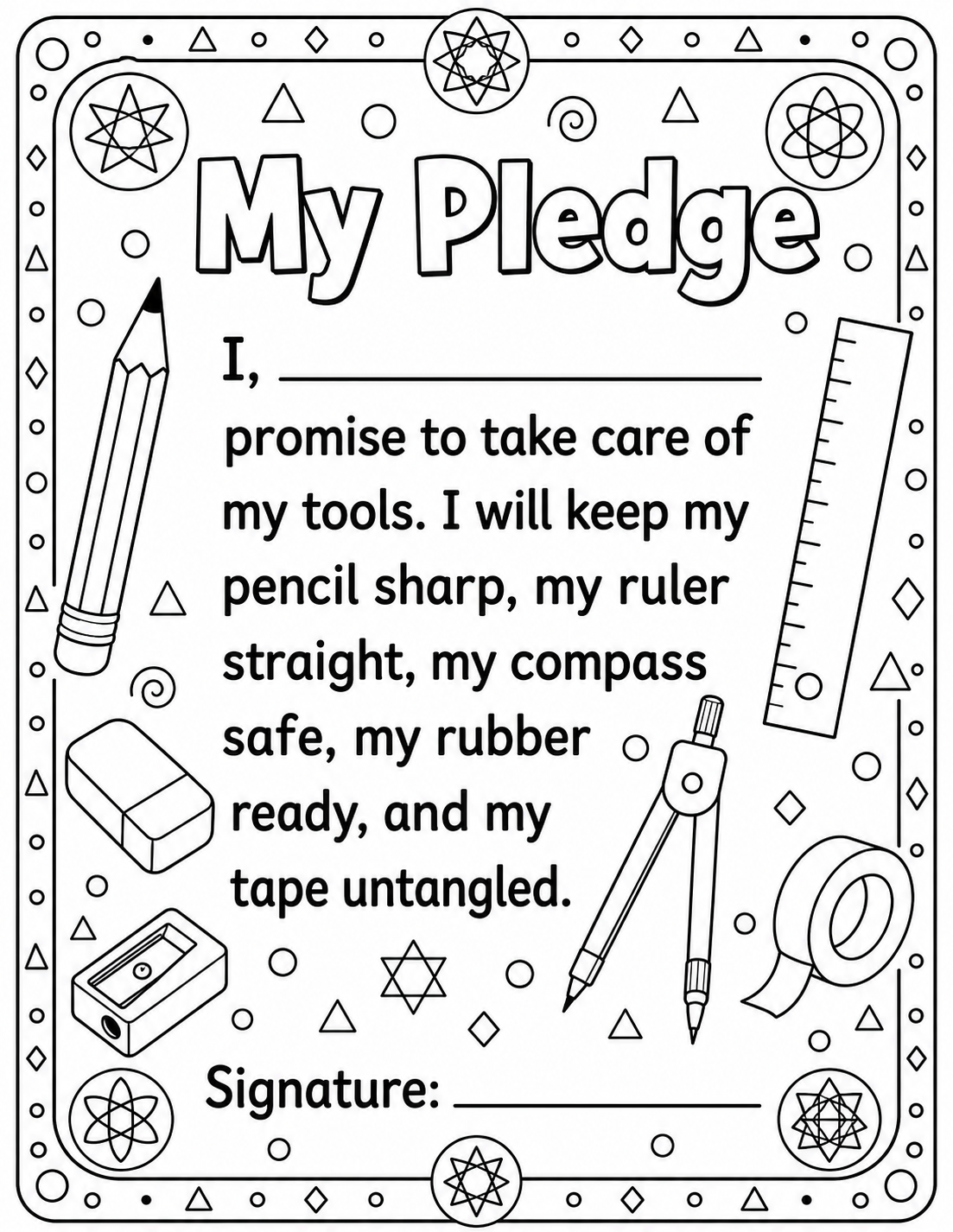
Every Mandala Maker cares for their tools. Treat them kindly, and they will always be ready to create something beautiful. Can you promise to look after yours?
- Take a fresh page and write your pledge: “I will keep my pencil sharp, my ruler straight, my compass safe, my rubber ready and my tape untangled.”
- Decorate the page with doodles of each tool—pencil, ruler, compass, rubber, sharpener and tape.
- Add borders, flourishes or tiny mandala patterns around the edges if you like.
- At the bottom, sign your name with pride.
This is your official pledge as a Mandala Maker. Keep it as a reminder: your tools are more than objects—they are companions in creativity.
Canvas
Smudge spread a fresh sheet of paper across his desk and pressed down the corners.
“Every mandala begins with a canvas—simple, white and full of possibility.”
He stepped back proudly.
The paper sprang to life, curled up like a hedgehog and slid off the desk like soap in the bathtub.
The hedgehog gave an approving nod.
It drifted all the way to the back and stopped at the sloth’s feet. He blinked, then very slowly picked it up and held it out with a yawn.
“Dropped something,” he said.
Smudge scurried to the back and bowed as he accepted it, hiding a smile at the sloth’s slow-motion, unintentional comedy.
“Thank you. A fine demonstration of teamwork. And that, class, is exactly why we need tape. But first…”
Smudge let the silence hang before rapping the table with his knuckles. THUNK, THUNK.
“We need the right surface.”
Surface
Your Stage
“Paper needs a perfect stage, you see. Too soft, and your pencil digs in and tears holes. Too hard, and your compass slips and slides.”
“The best choices,” Smudge continued, “are things like a firm desk, cutting mat, sturdy cardboard or even a glass table with something slightly softer on top. Just firm enough to hold your tools steady—not so soft they sink, not so hard they slide away.”
Paper
Your Sacred Canvas
Smudge lifted the crisp white sheet again and held it aloft like a sacred scroll.
“Fine paper is wonderful—thick, smooth and perfect for colouring. But don’t worry if you don’t have any. Practice mandalas can be drawn on any paper at all. Once it’s on your desk, it becomes your sacred canvas.”
Tape
Keeping It Steady
Still pinning the paper in place with one hand, Smudge unrolled a strip of tape.
“This, my friends, is the secret weapon against sliding paper. A little piece at each corner, and your canvas won’t budge an inch.”
He pressed the tape to each corner, careful not to snag his sleeve—or his whiskers, the non-cat kind.
“There. No slipping. No spinning. Your mandala will stay exactly where it belongs.”
Finally, Smudge stepped back without mishap. The sheet lay ready: corners pinned, surface smooth, edges held firm. Plain to the eye, yet perfect—nothing more, nothing less—a canvas awaiting creation.
Prepare Your Sacred Canvas
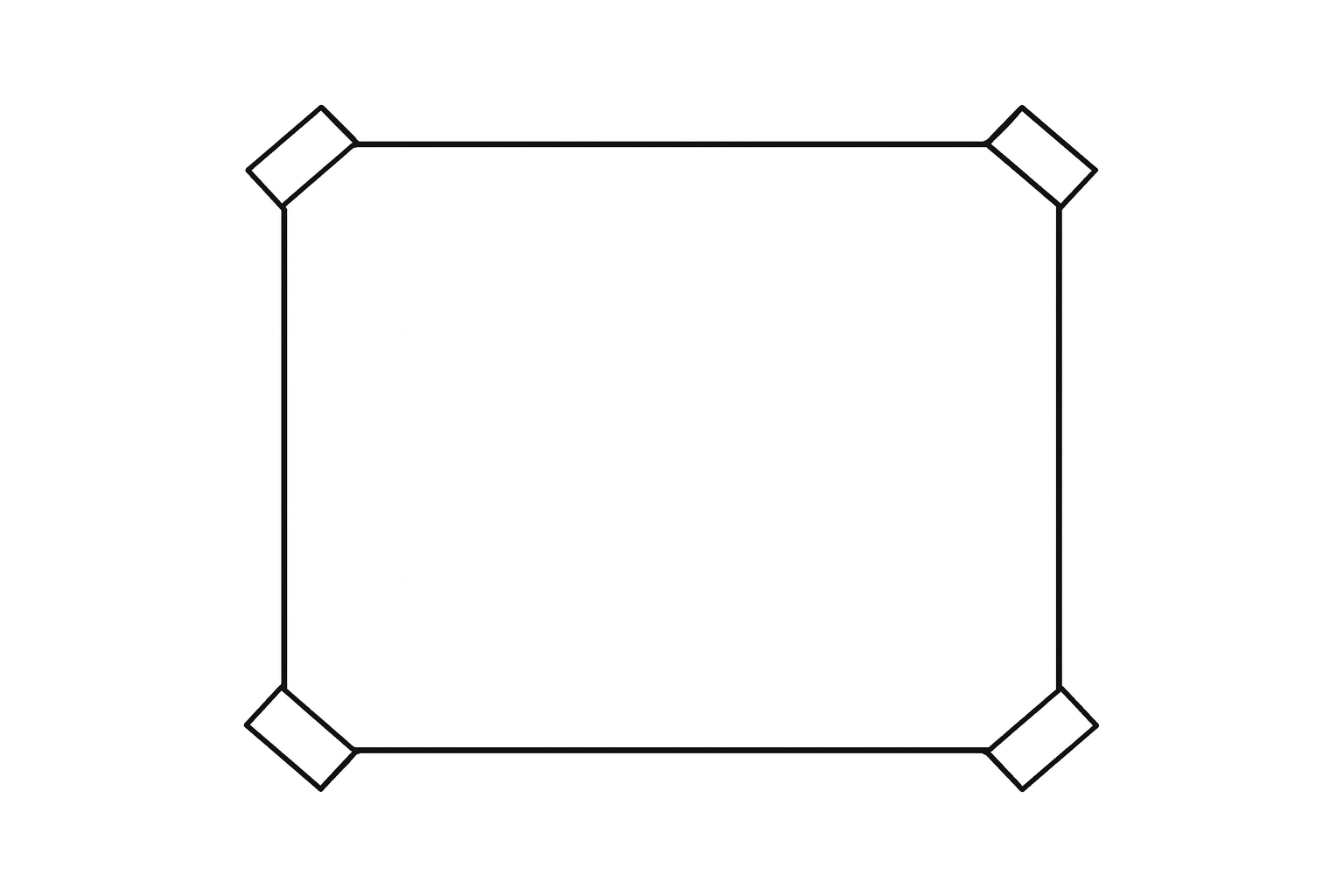
The canvas might look like an ordinary piece of paper, but with a little care it becomes something magical: a stage where your circles, patterns and stories come to life.
- Choose a piece of paper. Fancy or plain—either is fine.
- Place it on a surface that is not too soft and not too hard.
- If it slides, tape the corners down gently.
Congratulations! You have prepared your very first sacred canvas. Sit back, look at your work and take a deep breath. Onwards!
Circles
Smudge turned to the board and attempted to draw a perfect circle with his special chalkboard compass.
SCRRRT! The chalk slipped and wobbled like a squashed potato.
The mouse rolled on the floor, squeaking with laughter. For some reason, he found this highly amusing.
“Ha ha ha—squashed potato!” he giggled, pounding the floor with his tiny fists.
Smudge bowed. “Yes, yes—thank you. Very funny. But that, class, was a demonstration of what not to do.”
And, in truth, it really was.
“If your compass technique is wrong, then everything else will go wrong too.”
The squirrel piped up from the front row. “So… what’s the right technique, then?”
Smudge cracked his knuckles, rubbed out the mess he had made and said with great seriousness:
“The compass, my friends, is not just a tool—it’s a circle-maker, a pattern-shaper, a magic wand! But only if you use it properly. Here are the rules…”
- Keep your pencil sharp. A blunt pencil makes lumpy circles.
- Make your pencil and compass points the same length. Otherwise, your circle will wobble like jelly.
- Press gently on the compass needle—not the pencil. It is the anchor, so keep it steady in the centre.
- Twist the top of the compass gently with your fingers, like turning a key in a lock.
- Glide the pencil as you spin. Do not push or drag.
- Lean the compass gently along the circle’s path.
- Follow the motion as it goes around.
Smudge demonstrated once more. This time, a perfect circle appeared—absolutely perfect. The animals gasped and clapped, oohed and ahhed, wowed and whispered in wonder.
“So—now that you know the secrets of perfect compass technique, let’s put them to use!”
Circles, Circles, Circles
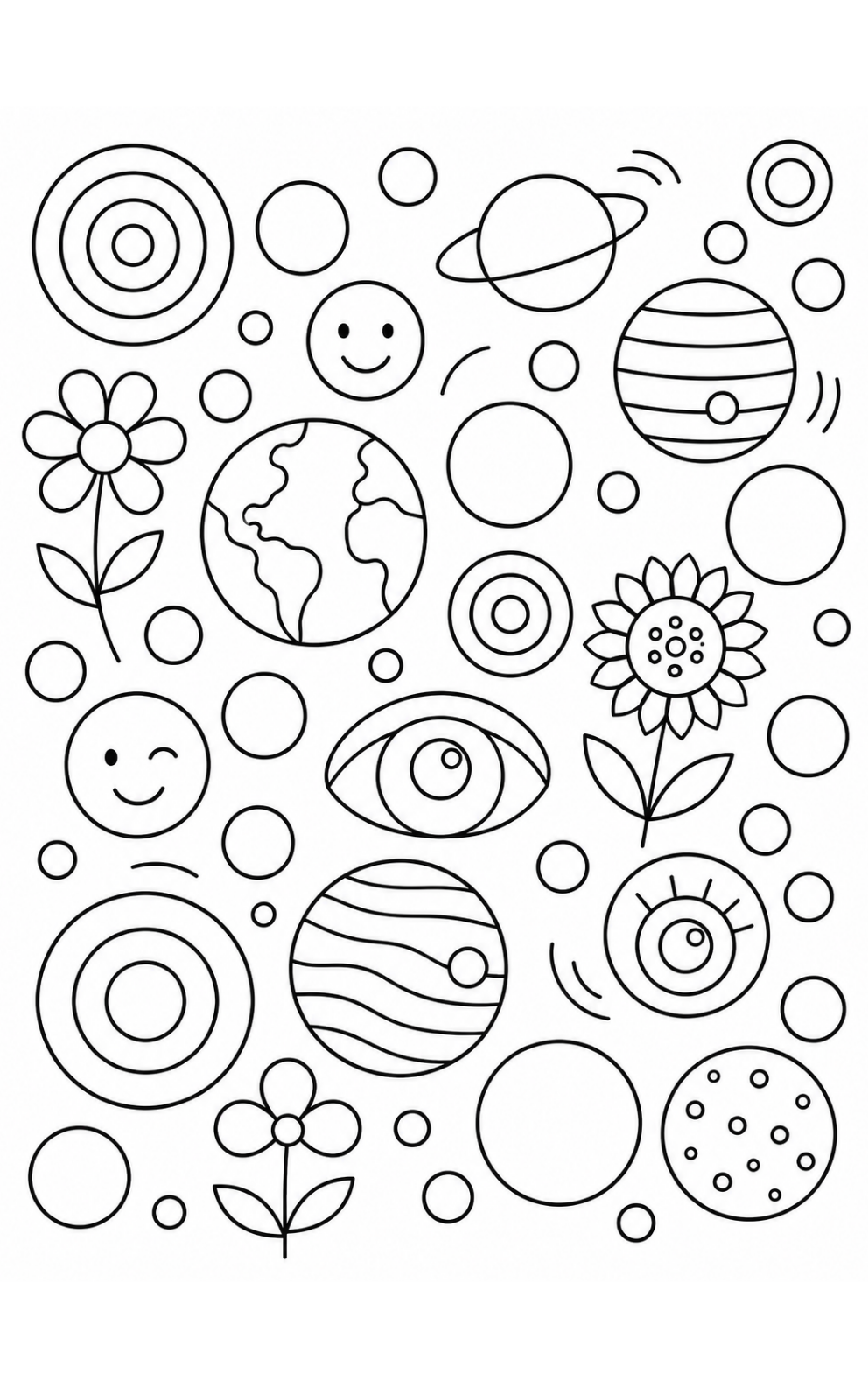
Part 1 — Circle Practice
Drawing perfect circles is your most important skill, and practice is your greatest teacher—after Smudge.
- Start with a perfectly prepared canvas.
- Set up your compass using Smudge’s techniques.
- Fill the page with circles of many sizes.
- Make a few concentric rings with the same centre.
- Try inside-out, from small to large, then outside-in, from large to small.
- Aim for even, unbroken lines. Correct any wobbles with calmer hands, not harder pressure.
Repeat, refine, improve—practice turns wobbles into wonders. Small loops today, grand mandalas tomorrow.
Part 2 — Circle Art
Now it’s time to turn practice into art. Your page of circles is more than an exercise—it is an art piece waiting to come alive.
- Look over your circles and imagine what they could become.
- Choose a few to transform: flowers, planets, eyes, bubbles—anything you like.
- Add details, colours and patterns inside and out.
- Connect circles with lines or shapes.
- Keep going until your page feels full of life: a celebration of every circle you have drawn.
There we go! From practice to perfection and beyond. Sign and date your artwork. Keep it proudly in your room—or frame it and give it to someone special.
Centred
Smudge quickly prepared a new canvas and tapped the middle with great drama. Tap, tap, tap.
“This is where every mandala is born—in the very centre. Without it, your design is like a jungle with no river… or a pancake with no syrup. Absolute chaos!”
The monkeys gasped in horror at the thought of syrup-less pancakes.
“Luckily,” Smudge went on, “finding the centre is easy. Let me show you how.”
Step 1
Prepare a New Canvas
You know the drill—firm surface, crisp paper, taped corners, tools at attention.
Smudge gave the page a ceremonial pat. “No wobbles on my watch. Showtime.”
Step 2
Find the Middle (Top to Bottom)
Smudge held up his ruler like a sword. The animals all stepped back cautiously.
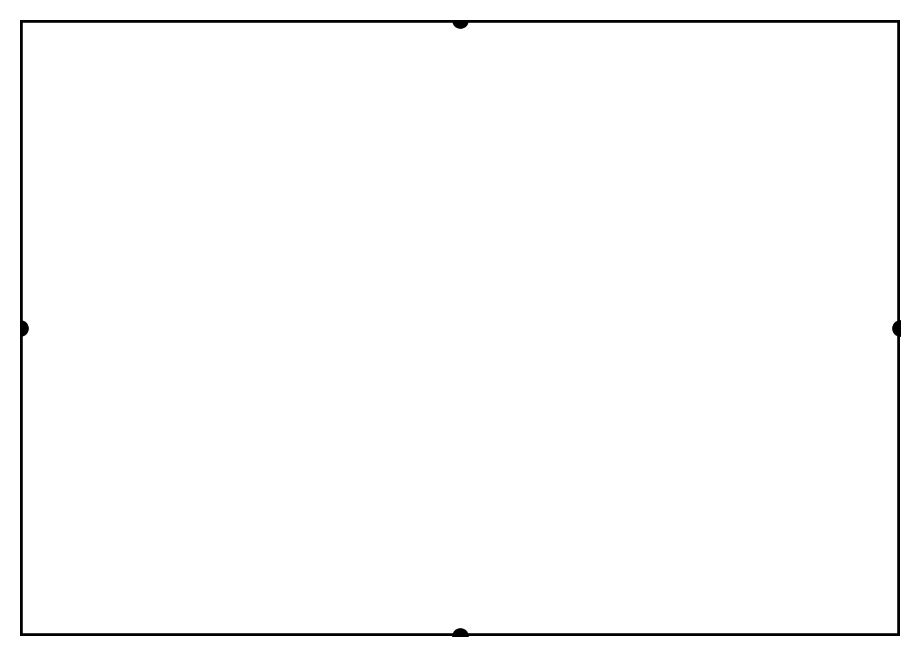
“First, measure the paper from top to bottom. Find the halfway point and make a tiny mark on the left edge and another on the right edge.”
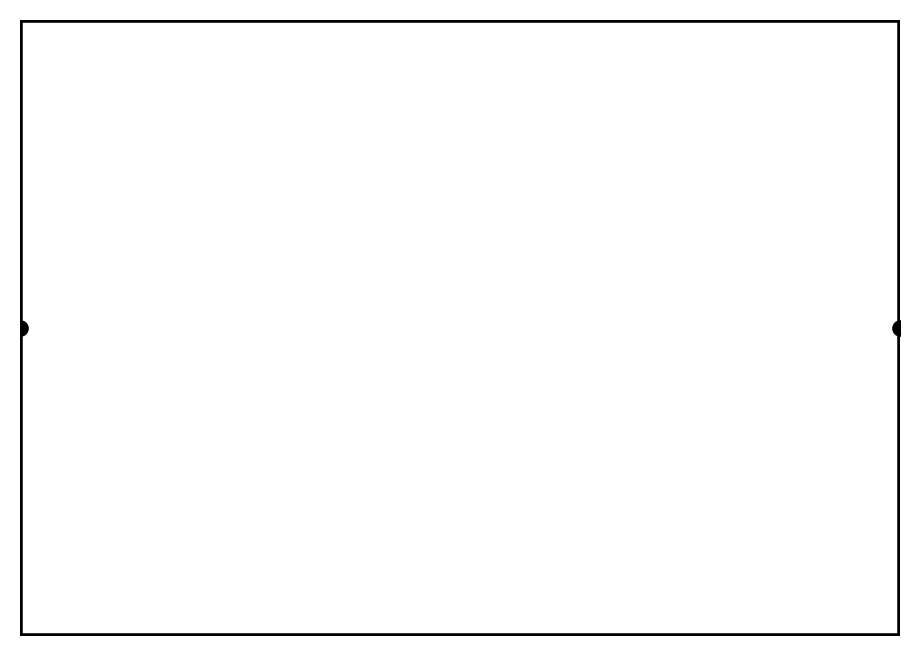
Step 3
Find the Middle (Side to Side)
Smudge squinted and made odd little noises as he concentrated. The animals gave him strange looks, but they were impressed by his craftsmanship.
“Next, do the same from side to side: find the halfway point on the top edge and the bottom edge. Make tiny marks.”
Step 4
Draw Your Guidelines
“Now, join the marks with your ruler and light pencil: one straight line across the page for the horizontal—left to right—and one line up and down for the vertical—top to bottom.”
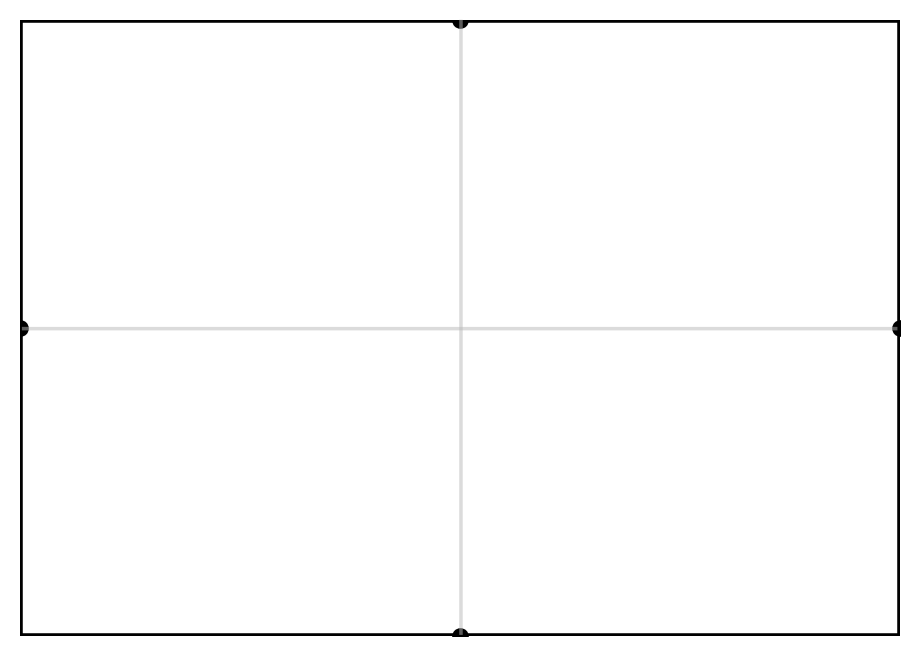
“Where they cross—ta-da! That’s your centre.” Smudge tapped the exact spot.
“This tiny point is the heart of your mandala. Hold it steady, and your circles will flow from it like ripples in water.”
Get Centred
The centre of your page will become the centre of your mandala, the point everything grows from. Without it, nothing stays balanced. So, can you find it?
- Place your ruler across the paper from top to bottom.
- Mark the halfway point on each edge.
- Do the same from side to side.
- Draw straight vertical and horizontal lines using these marks.
- Where the two lines meet, make a tiny dot.
All done! Step back and see—you have found the very centre. It is ready, balanced and waiting.
Mini Mandala
“Now that we can use the compass like ninjas—fast, nimble and agile—we’re ready for our very first professional mandala,” Smudge declared.
GRRRRRRROOOOWL!
His stomach interrupted. It rumbled so loudly that the parrots nearly fell off their perches.
“Quickly! It’s nearly lunchtime, and I need a sandwich,” he admitted, patting his belly.
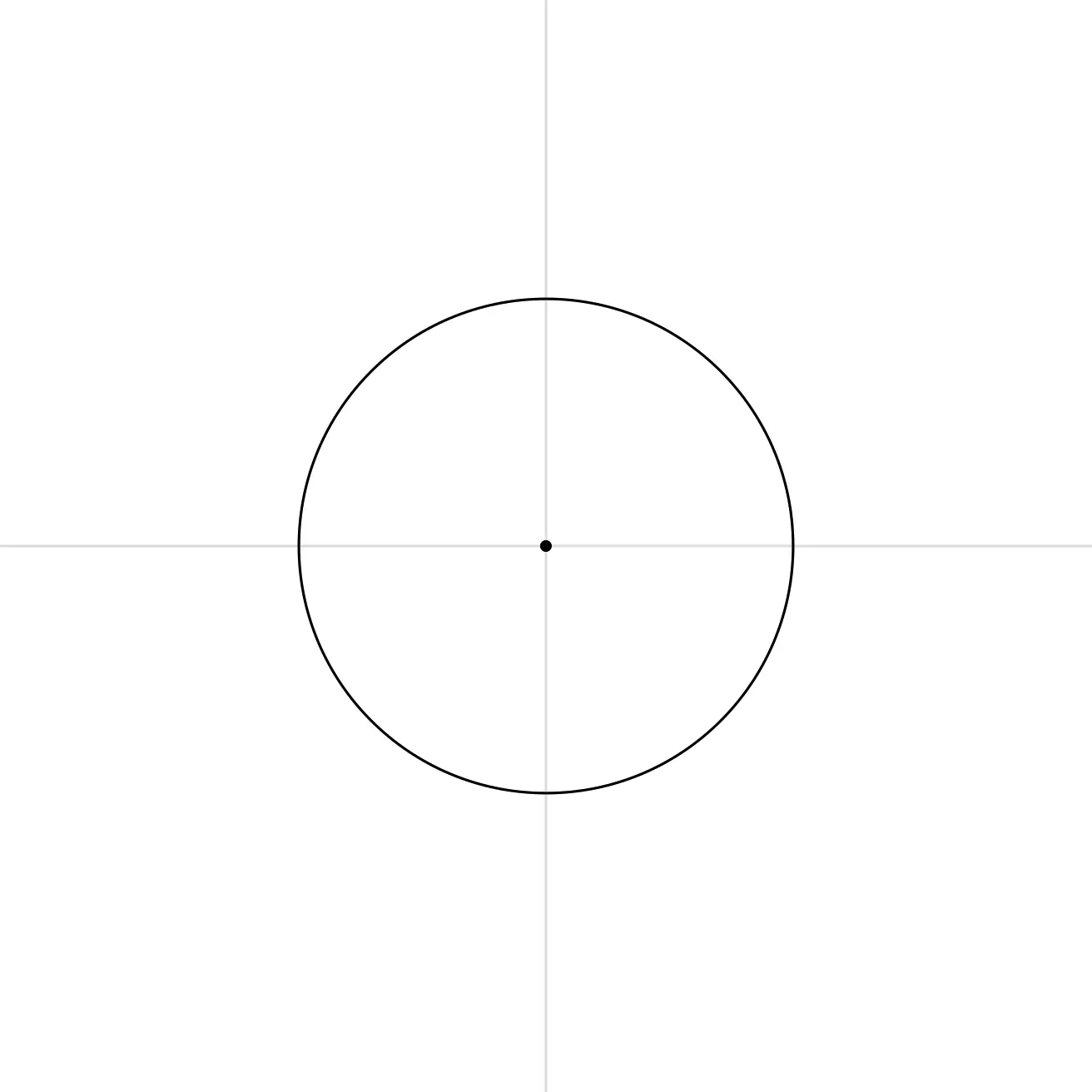
“Let’s start small. Think of this as a warm-up before the big show—a snack-sized mandala. Just a few arcs stacked together, like layers of bread and filling. Bingo!”
Step 1
Set the Stage
Make sure your canvas is prepared, secured and centred—ready and waiting for more.
Smudge nodded. “Set, centred, splendid. Onward!”

Step 2
The Centre Circle
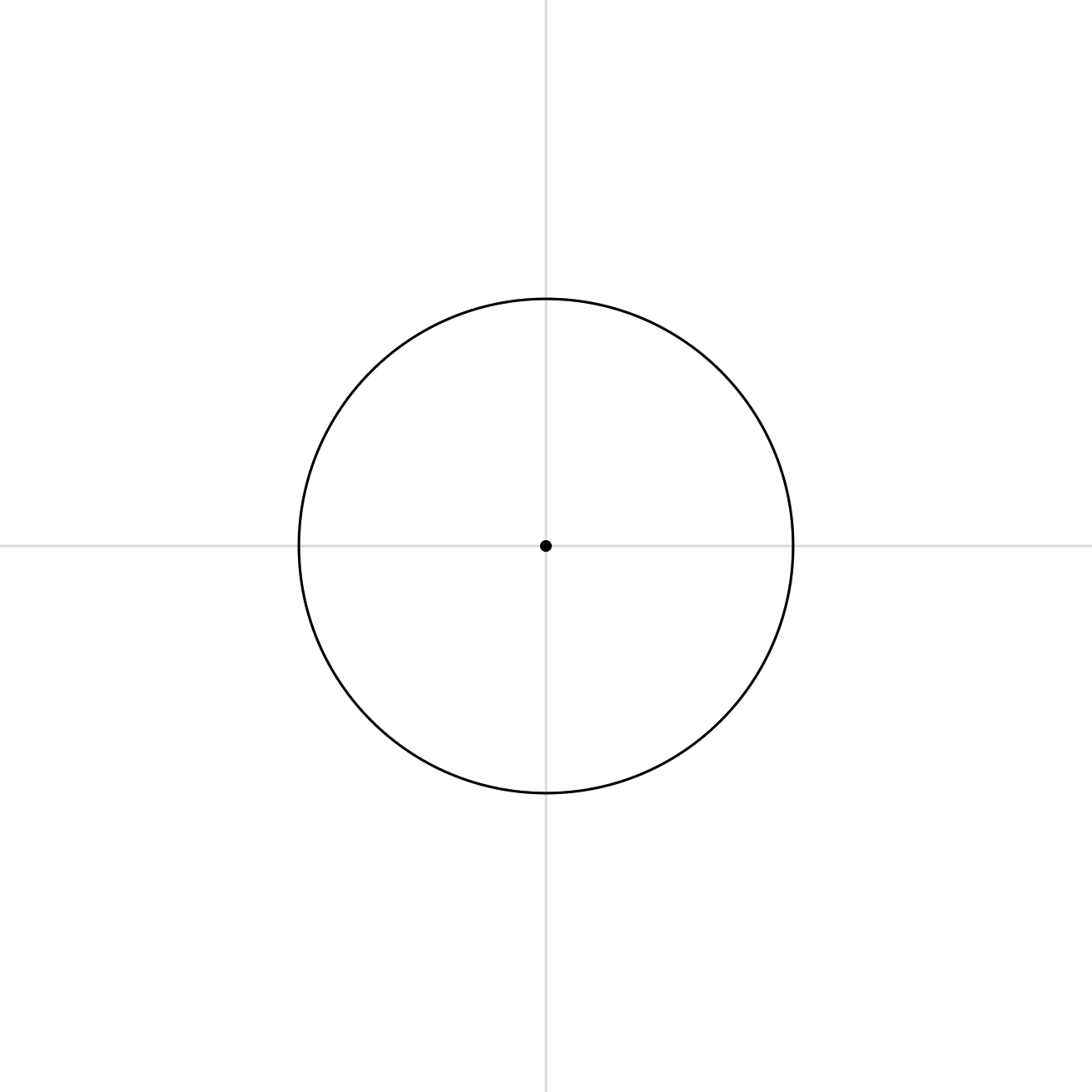
“Compass ready?” Smudge called. “Needle on the centre, pencil stretched outward. Now spin a smooth circle—nice and steady—and give the middle a tap for good measure.”
Step 3
First Petal Edge
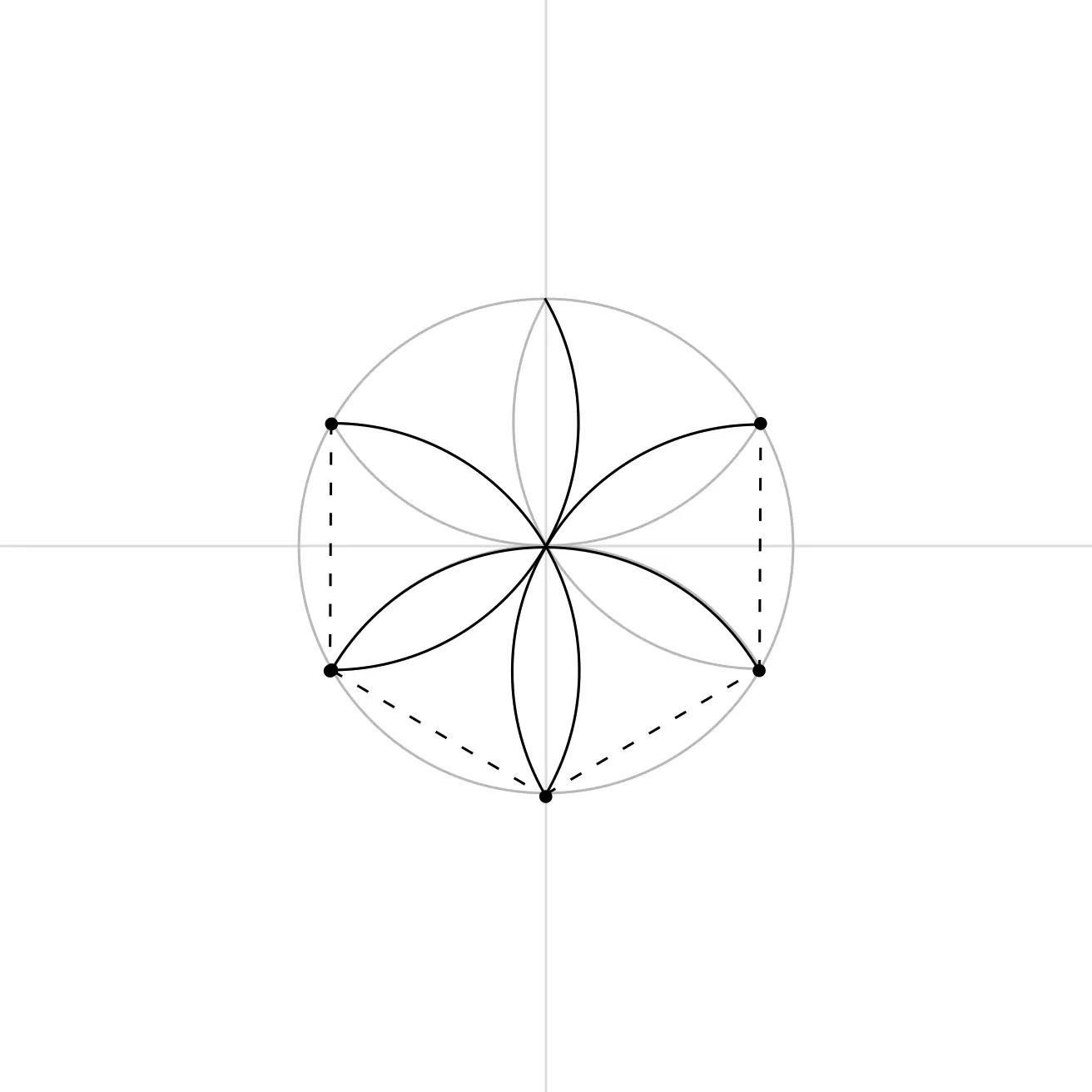
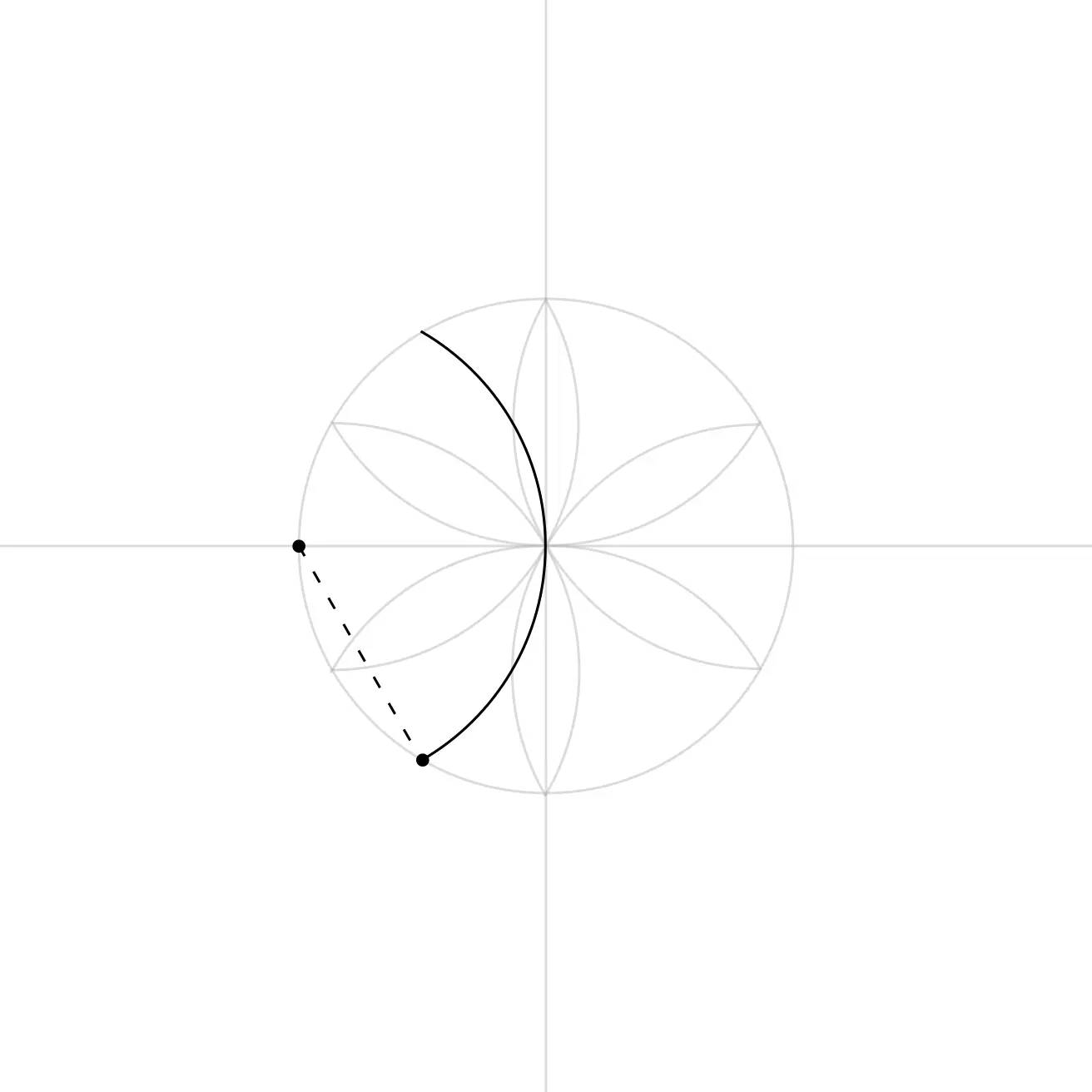
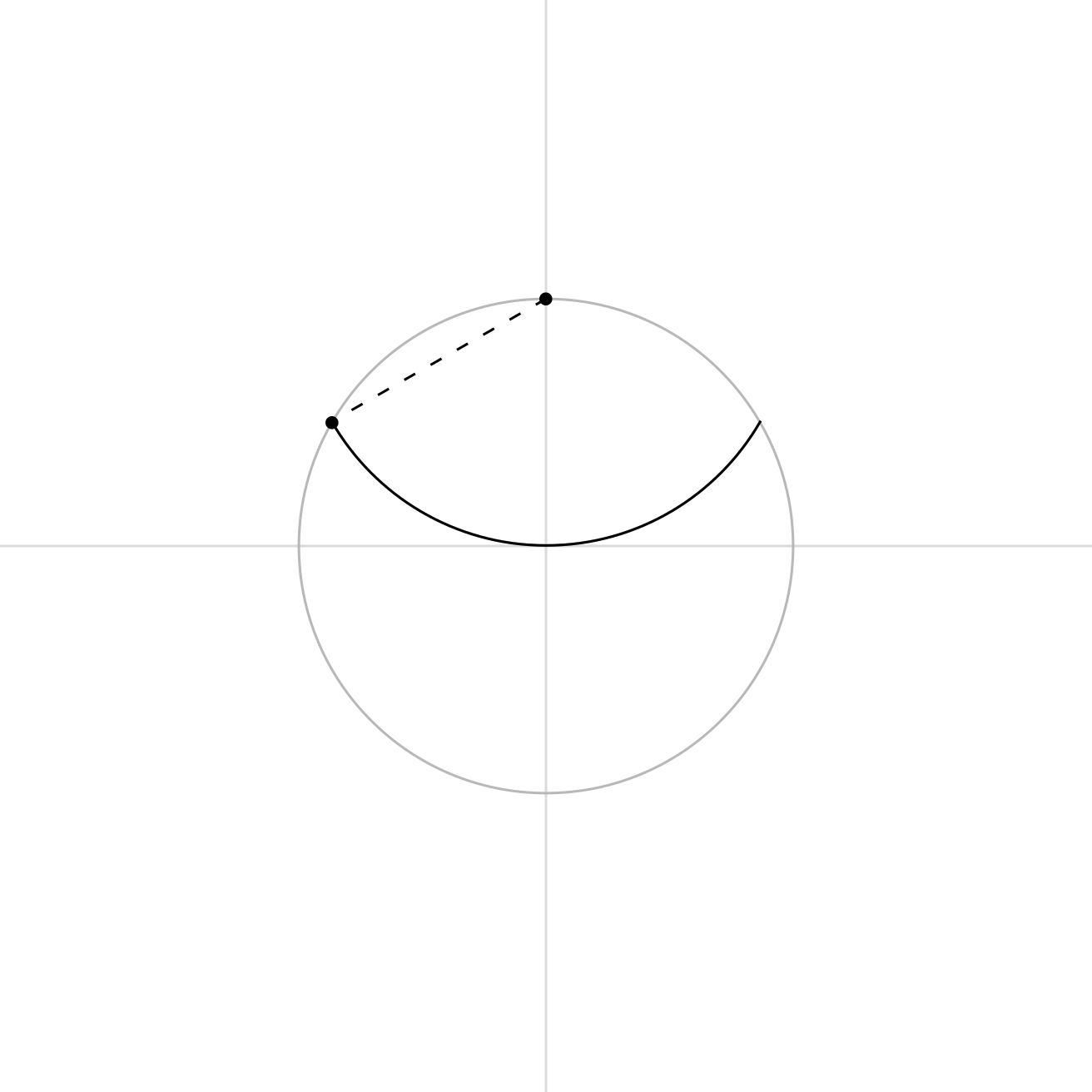
“Time for a petal!” Smudge cheered. He placed his compass on the top crossing—where the vertical line meets the circle. “Now draw an inside arc.”
Step 4
Second Petal Edge
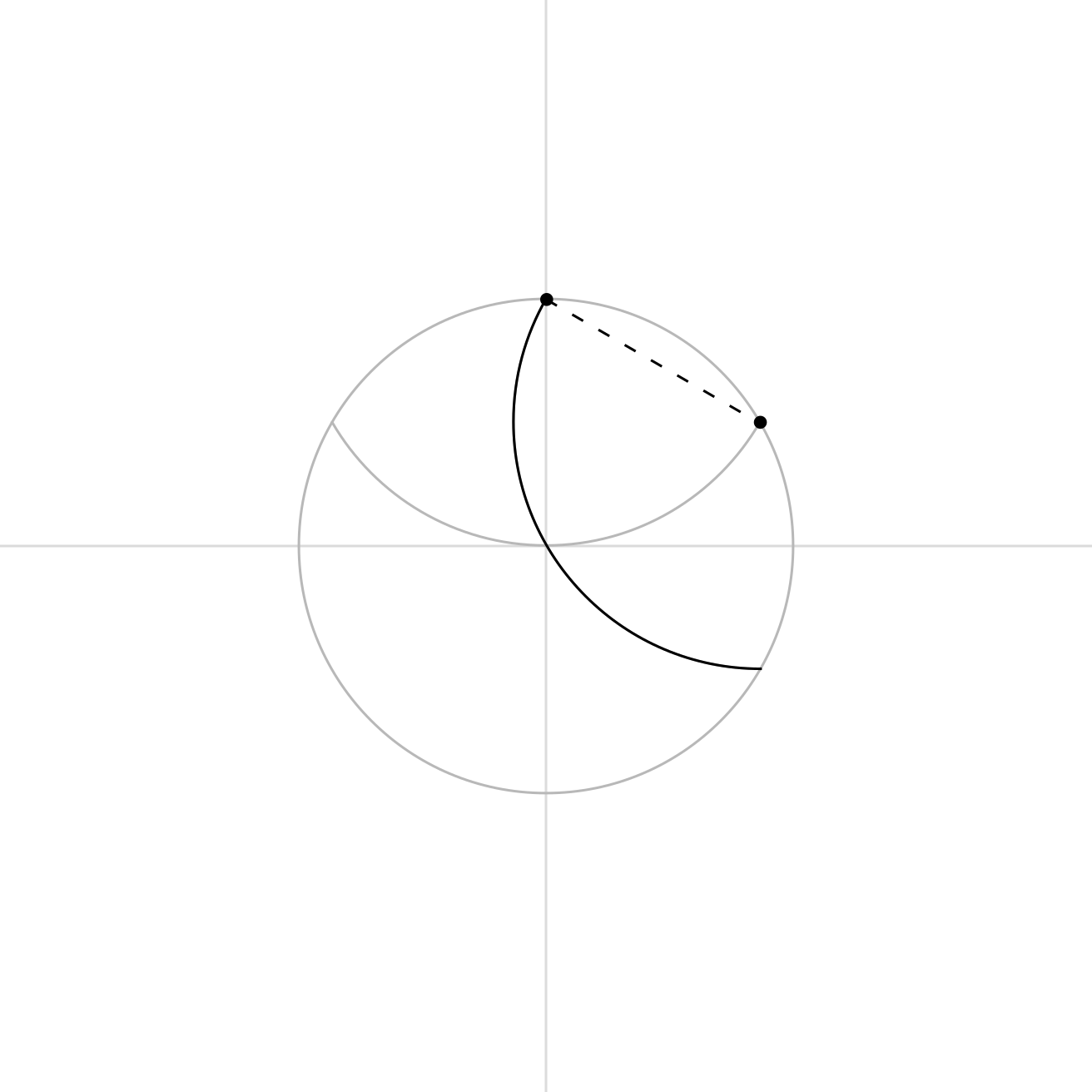
“See the new spots where the arc meets the circle?” Smudge said. “Hop your compass on one of those and draw another arc.”
Step 5
Walk It Around
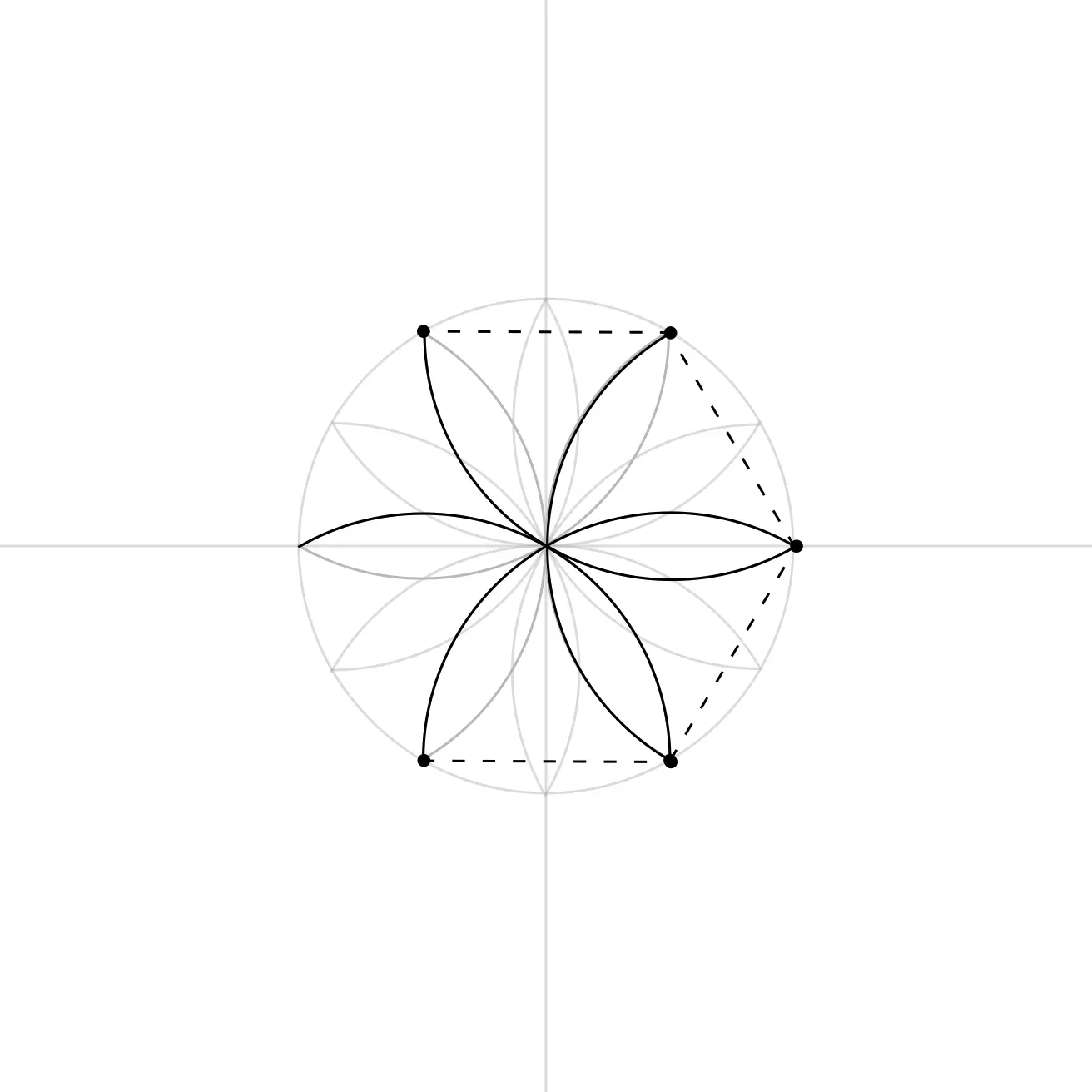
Smudge stepped his compass carefully from one intersection to the next, tracing arcs as he went.
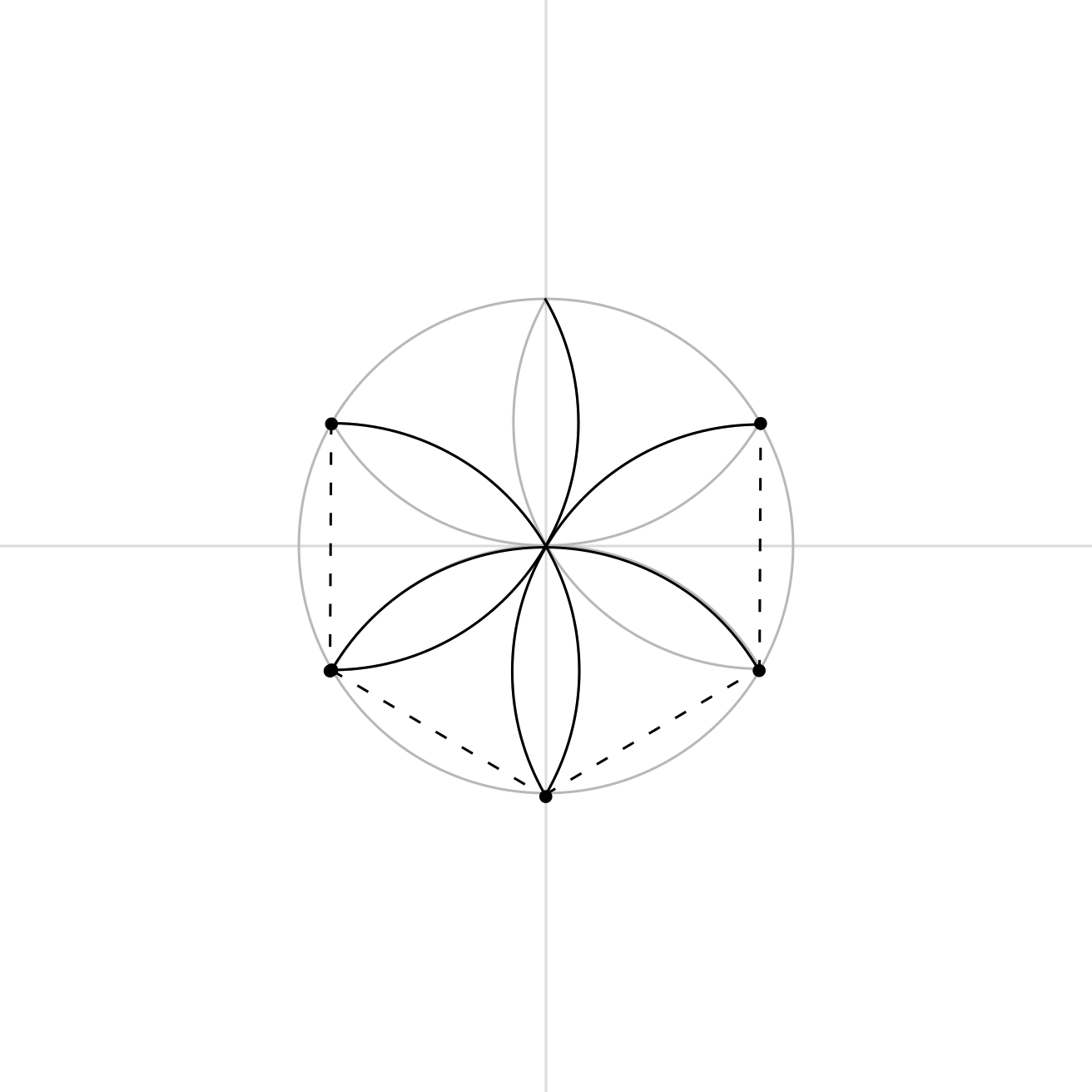
“Walk it, walk it, walk it… and like magic, the petals grow all the way around.”
Step 6
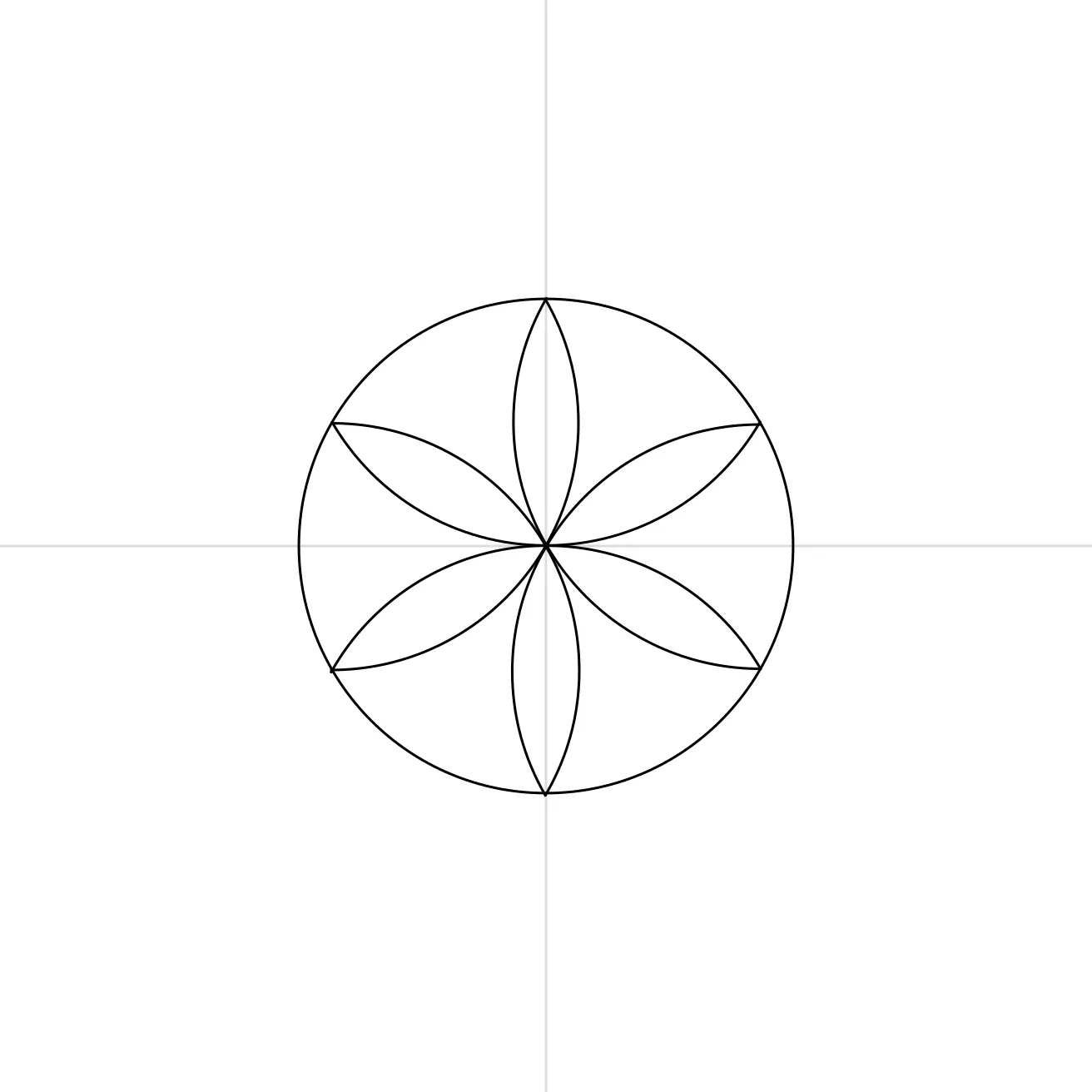
Congratulations!
“There you have it—a baby mandala, small but perfectly formed!” Smudge bowed.
“Feel free to applaud yourself. I certainly would.”
The animals leaned in to admire it: a tiny circle of harmony, neat as a button and full of promise.
Step 7
Go Again
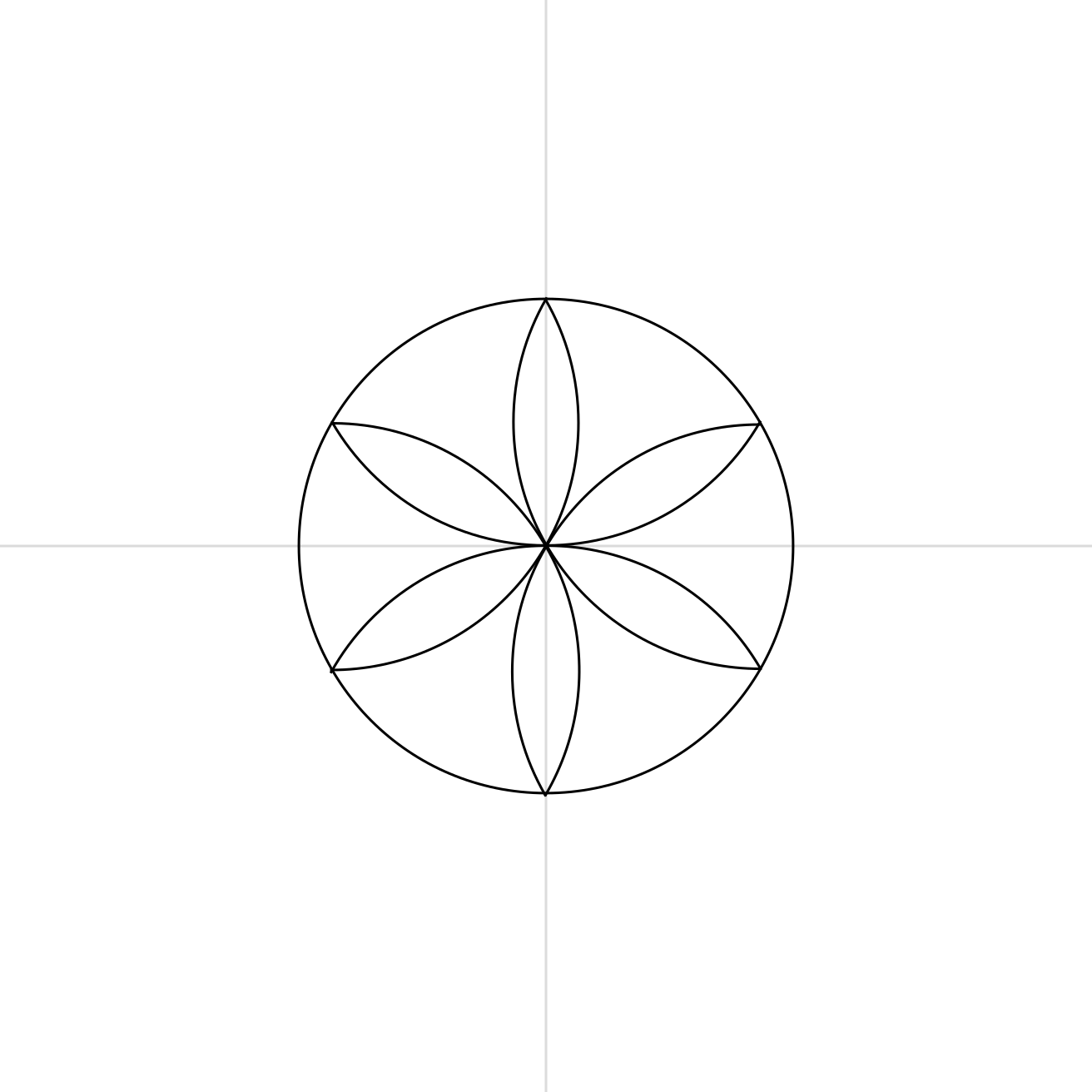
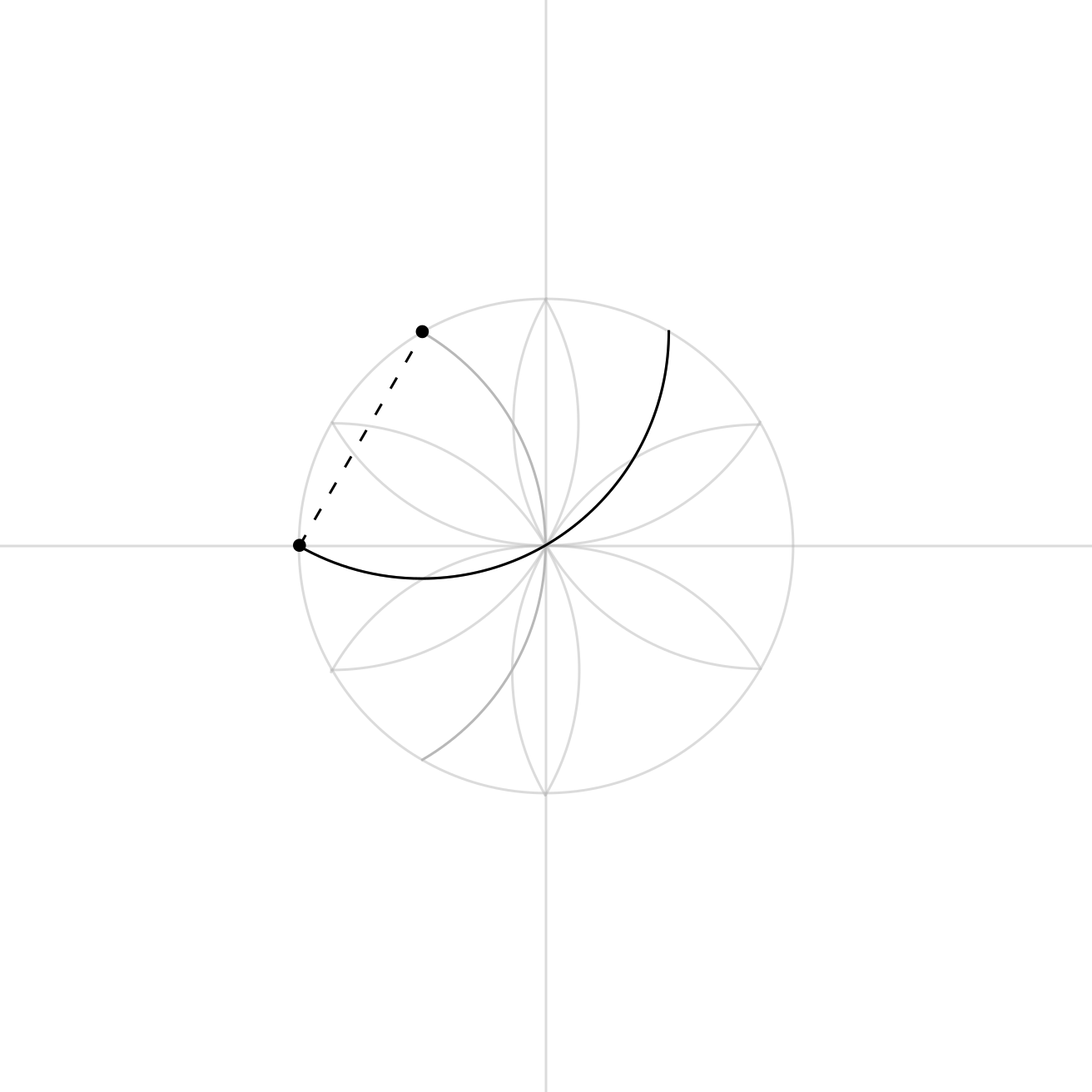
“But wait—there’s more!” Smudge grinned. “Do it all again, but this time start on the side intersection, where the horizontal line meets the circle.”
Step 8
Next Petal Edge
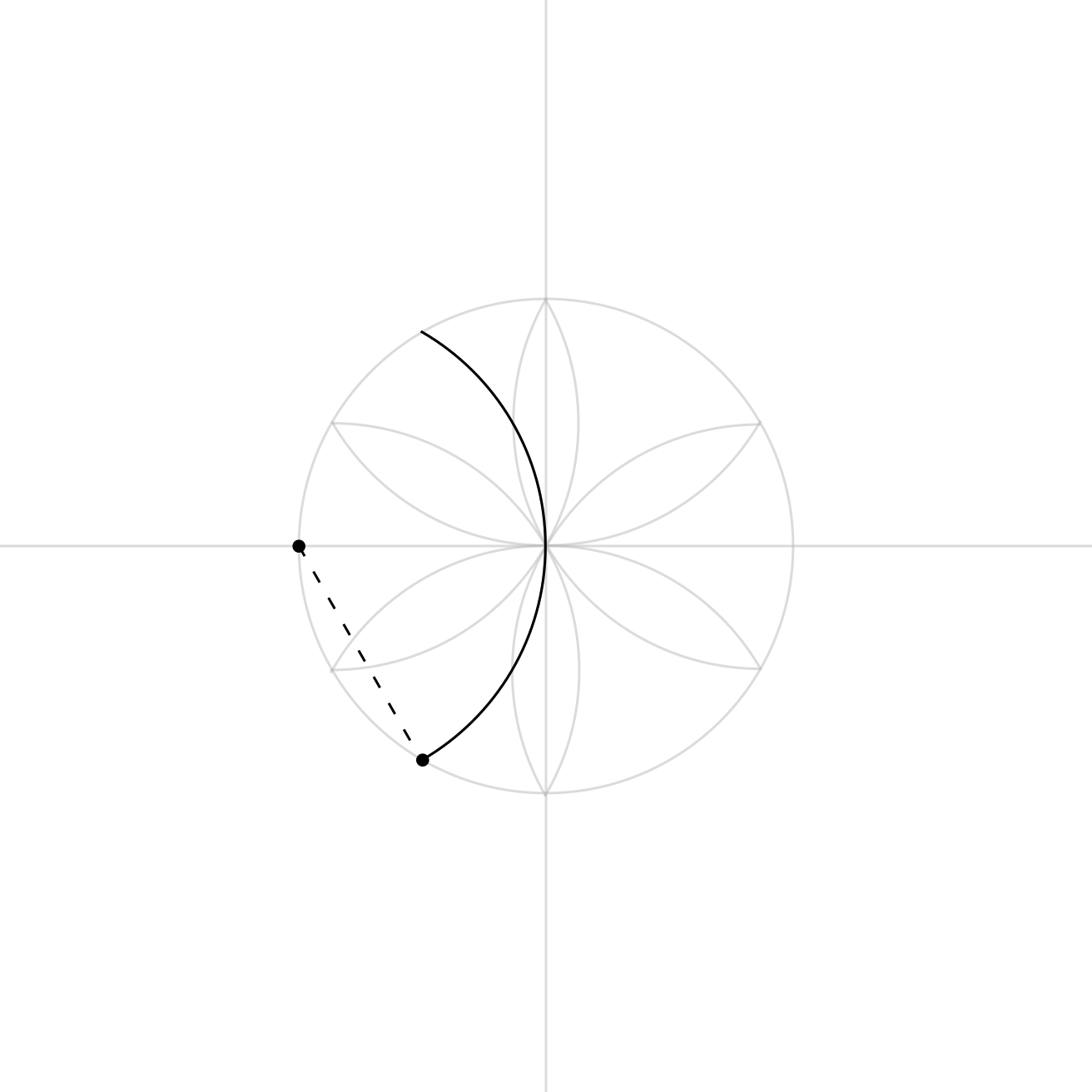
“Move your compass point to a new intersection—right where the new arc meets the circle,” Smudge said. “Now repeat with another inside arc. You know the score!”
Step 9
Walk It Around
“Now, don’t stop there!” Smudge said. “Keep stepping from one intersection to the next, drawing the same gentle arc each time. Nice and steady—no wobbles!”
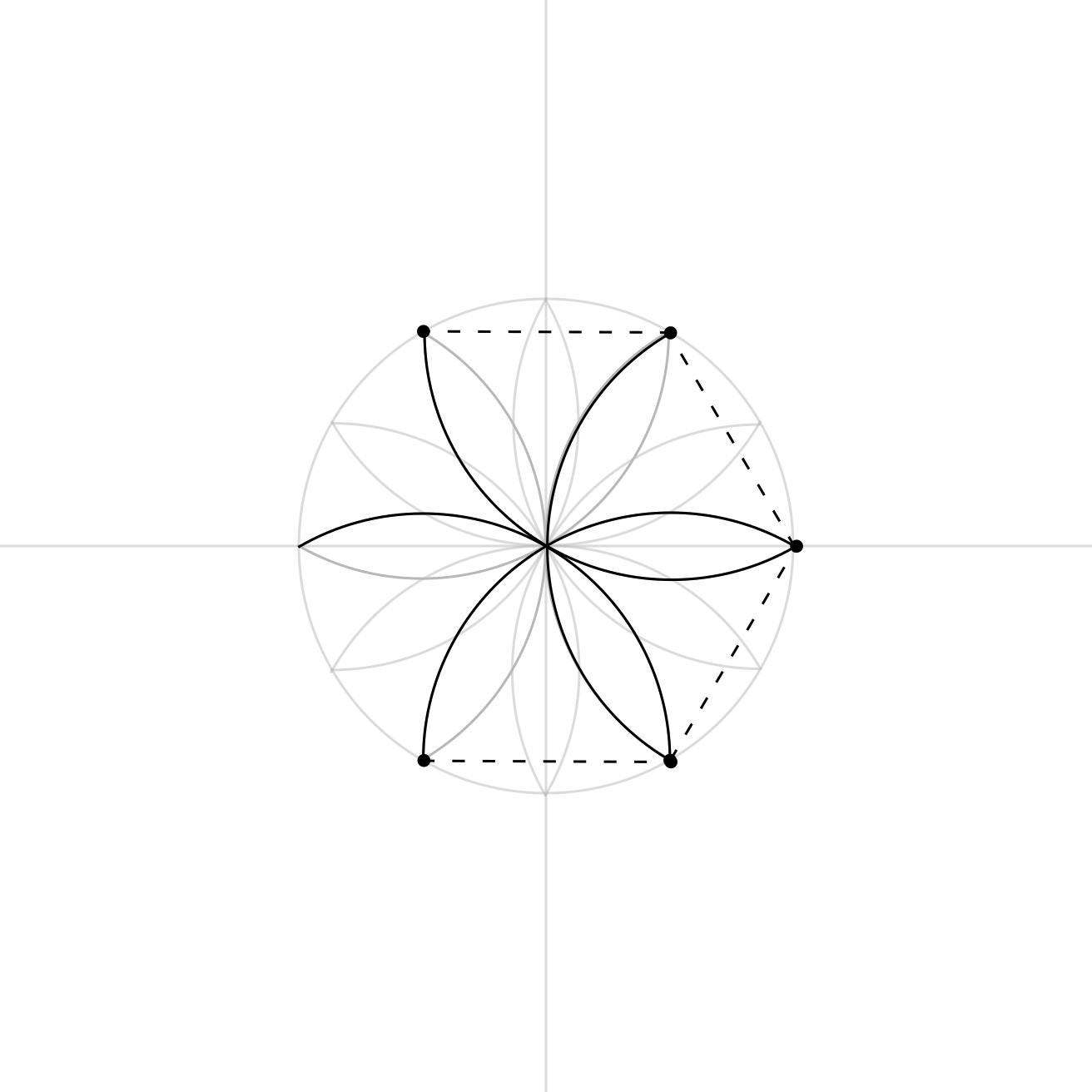
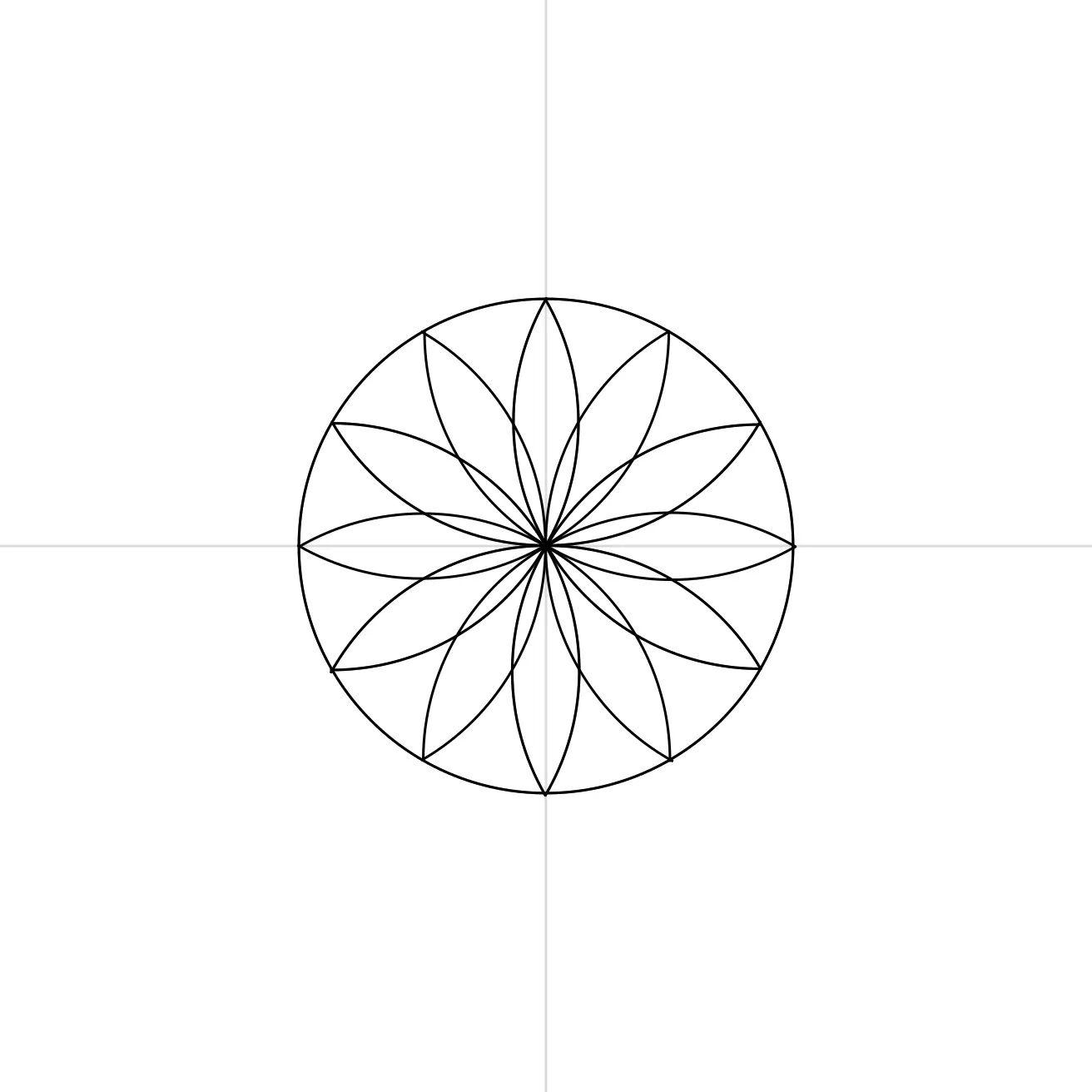
“And voilà!” Smudge dusted off his hands. “An even more beautiful baby mandala—small, steady and bursting with possibilities.”
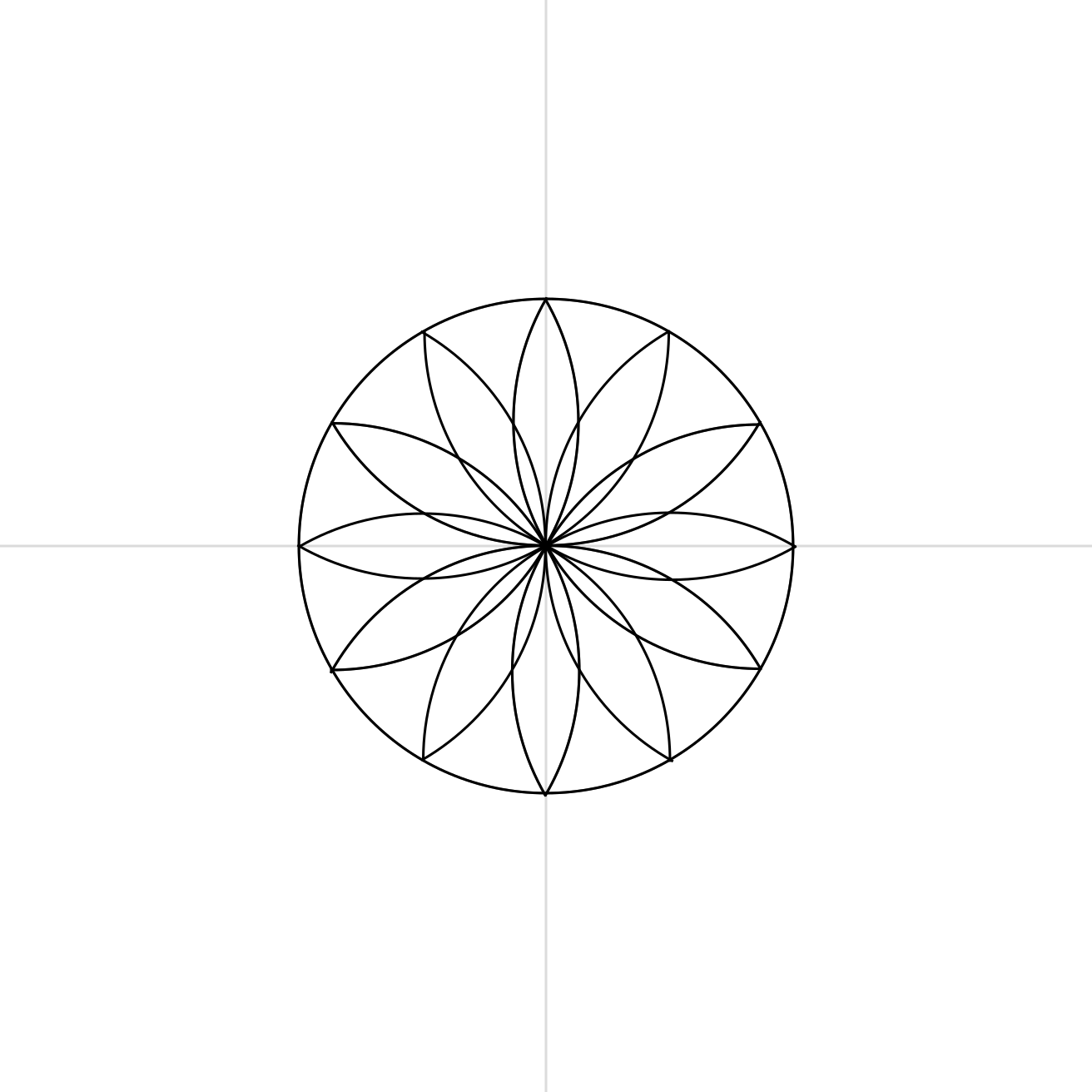
Baby Mandala
Big mandalas can wait. For now, let’s keep it small and simple—just a baby one to get you started. You’ve watched Smudge; now it’s your turn.
- Follow Smudge’s steps exactly.
- Centre your page with a vertical and horizontal line.
- Use the centre to draw a perfect circle.
- Start with a vertical intersection and draw arcs all the way around.
- Do the same for a horizontal intersection.
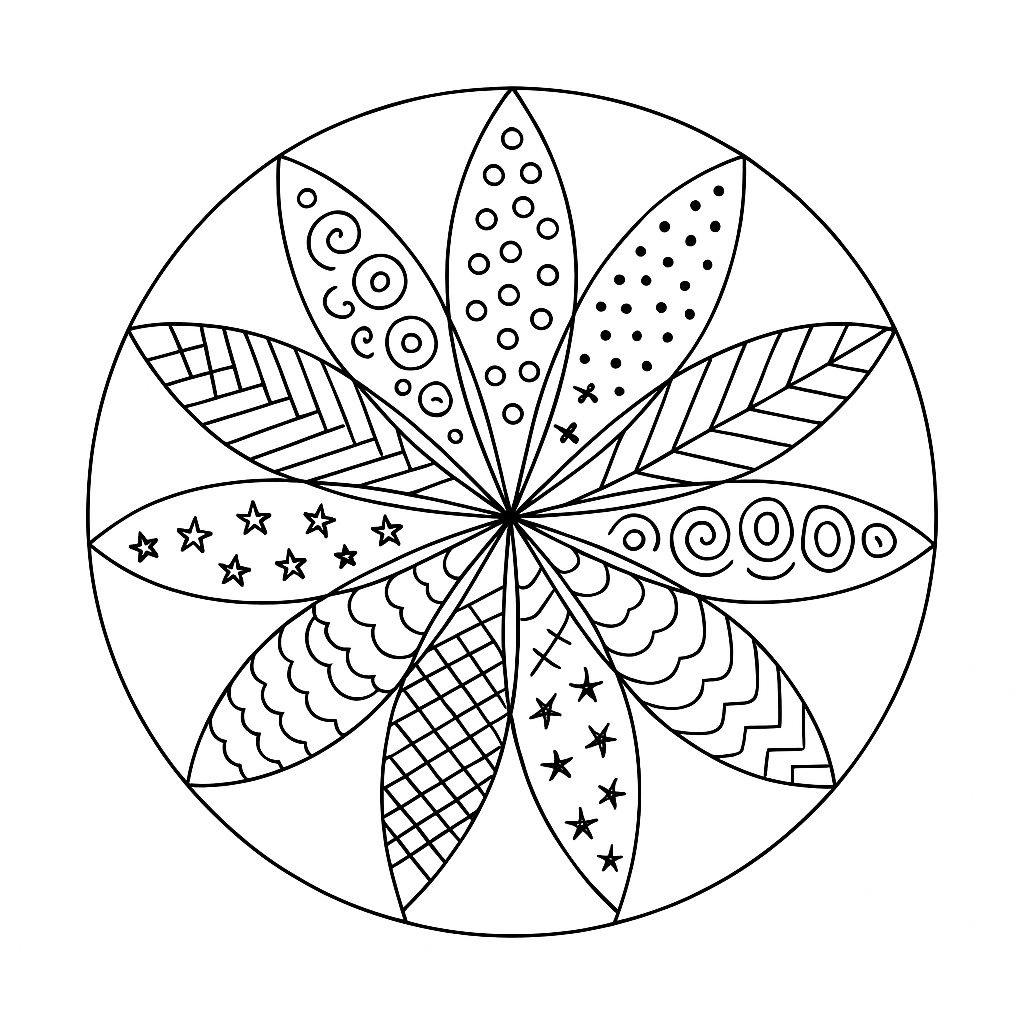
- Decorate the petals however you like—dots, spirals, stripes or whatever takes your fancy.
Well, look at that! You’ve made your very first mandala: small but mighty.
Lunchtime
BOOOOONG!
At the back of the hall, the gorilla lowered the mallet with great ceremony. He had been given gong duty—and proved to be quite excellent at timekeeping.
Smudge clapped his hands. “Hurrah! Lunchtime! Lessons pause—sandwiches commence!”
The animals cheered and poured outside into the sunshine. Out came baskets of fruit, leafy greens, nuts and more bananas than the monkeys knew what to do with.
Even the tiger behaved himself, announcing kindly, “I’ll be vegan for the day.” He promptly sank his teeth into a melon with a growl of surprising delight.
The mouse was not taking any chances—with Whiskers or the tiger. Perching safely on the hippo’s head seemed like the best option.
Lunchtime at Mandala School was every bit as noisy and colourful as the lessons themselves.
As bellies filled and chatter softened, a gentle hush settled over the clearing.
“What if we made a mandala right now?” the flamingo suggested, her long neck curving like a question mark.
The animals glanced at one another, eyes bright with curiosity. Heads nodded. Tails flicked. Wings rustled.
So they did.
The elephant stepped forward first, planting himself at the very centre—enormous, steady, a living pillar. Around him sat the hippo, tiger and crocodile, forming a solid middle ring. The butterflies drifted into the next circle, joined by more mice and frogs. Along the outer edge, birds settled—followed by yet more butterflies—until the whole assembly spun into one vast ring of colour and motion.
From above, it was a living mandala: feathers, fur, scales and smiles arranged in perfect symmetry.
Smudge stood back, eyes shining. “Marvellous,” he whispered. “A mandala made not with pencils, but with paws and claws.”
For a long moment, no one moved. The living mandala seemed too perfect to break. But break it must. There was more work to be done.
A Living Mandala
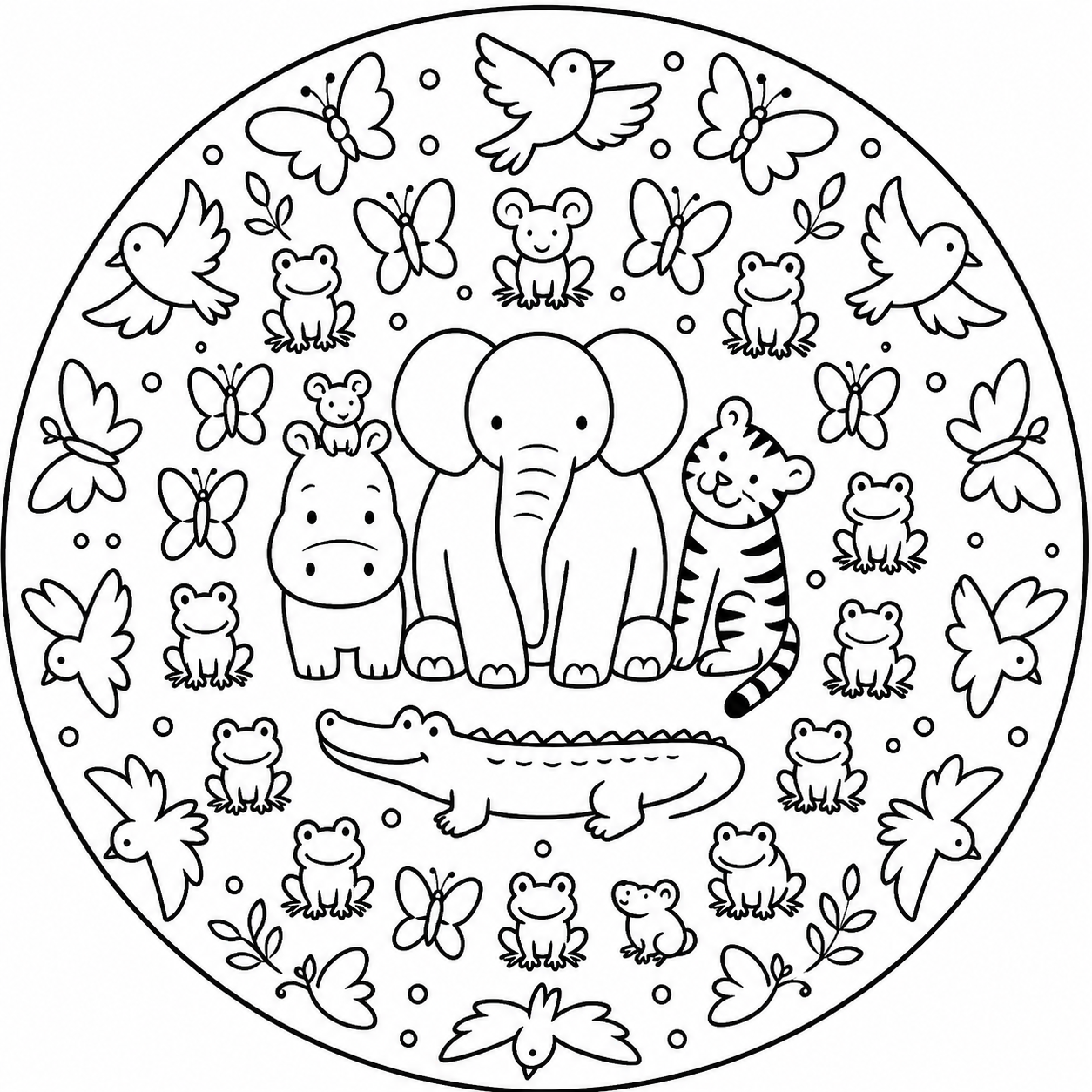
The animals have made a mandala together—not with pencils, rulers or compasses, but with paws, claws, wings, scales, feathers and fur.
Everyone has a place. Everyone adds something different. And together, they make one beautiful circle.
Thank You
You’ve reached the end of the chapters available to read here.
But Mandala School is only just beginning. There are more circles to draw, more patterns to build, and a whole classroom of animals still waiting to graduate.
The complete book is available free as PDF and EPUB, with a paperback edition too.